What Makes a Fanny Pack Truly Adventure-Ready
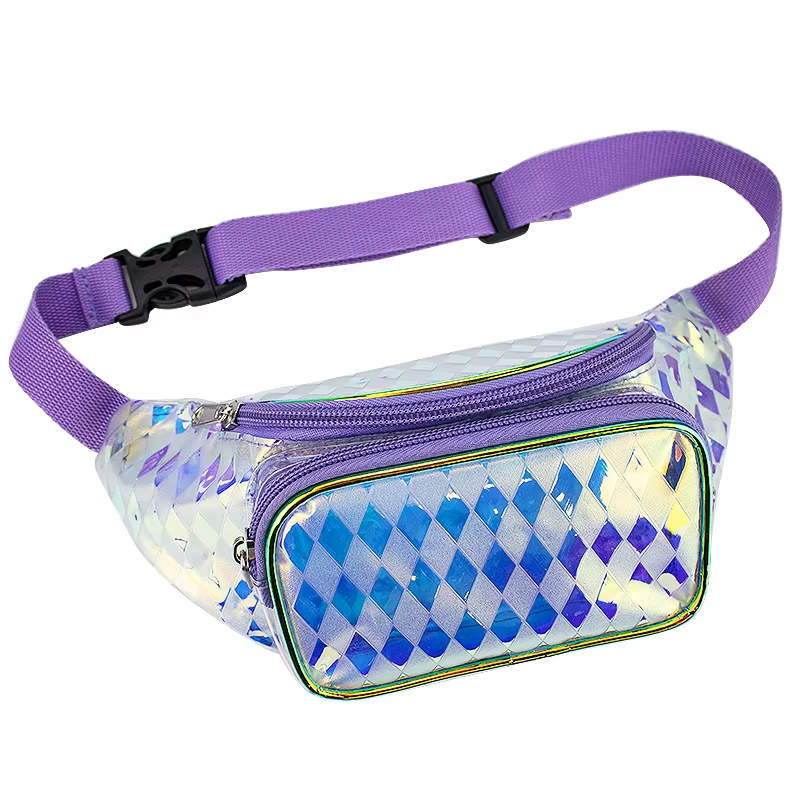
When you are hiking through misty trails, kayaking along a winding river, or navigating a crowded outdoor festival during an unexpected drizzle, the last thing you want to worry about is whether your phone, wallet, and keys are staying dry. A standard waist bag might hold your essentials, but once moisture seeps through the zipper or fabric, you are dealing with damaged electronics, soggy cash, and frustration. This is where a waterproof fanny pack makes all the difference. Unlike ordinary waist bags that rely on basic nylon or cotton, a purpose-built waterproof fanny pack uses coated fabrics, sealed zippers, and welded seam construction to create a moisture barrier that keeps contents dry even in heavy rain or splashing water. Based on years of experience in bag manufacturing, we have observed that the most reliable waterproof fanny packs consistently share three traits: a durable water-repellent outer shell, watertight closure systems, and materials that do not absorb moisture even after prolonged exposure. These are not just marketing checkboxes; they directly determine whether your gear survives an unexpected downpour or a splash from a kayak paddle.
Key Materials That Determine Waterproof Performance
The foundation of any waterproof fanny pack is its material. Nylon with a polyurethane coating remains one of the most widely used options because it balances weight, flexibility, and water resistance. For applications where the bag will face repeated submersion or constant spray, tarpaulin PVC offers a heavier but more absolute barrier against water. Some manufacturers also use coated polyester for lighter-duty scenarios where splash protection is enough. Beyond the base fabric, the zipper system matters just as much. Standard coil zippers will leak almost immediately under rain; true waterproof fanny packs use either a roll-top closure with a buckle or a specialized waterproof zipper with rubberized teeth and a sealed tape backing. The seams are another critical weak point. In entry-level bags, seams are simply stitched, leaving needle holes that wick moisture inward. In a properly constructed waterproof fanny pack, seams are either heat-welded or taped over with waterproof seam tape, eliminating those microscopic entry points entirely. From a manufacturing standpoint at facilities like our 2,000-square-meter factory, achieving consistent seam sealing across thousands of units requires rigorous quality control at every stage, from cutting to final inspection.

Practical Features for Real Outdoor Use
Waterproofing alone is not enough if the bag fails in everyday usability. An adventure-ready fanny pack needs an adjustable strap system that stays secure during movement without bouncing or chafing. A strap that is too narrow will dig into your shoulder or waist after an hour of hiking; one that lacks grip will gradually loosen as you walk, shifting the bag from your hip to your stomach. The best designs use wide, padded straps with quick-release buckles and elastic keepers to manage excess length. Internal organization also matters. A single cavernous compartment forces you to dig through everything to find one item, which is inconvenient and exposes the entire contents to moisture every time you open the bag. Multiple compartments with independent closures let you separate a phone from snacks from a small first-aid kit. Some models even include a dedicated waterproof phone pocket accessible without opening the main compartment, a feature that heavy users consistently appreciate during sudden weather changes. An anonymous project we supported involved a brand that needed waist packs for a coastal running event series where participants ran through beach spray and occasional wave splash. The bags had to perform flawlessly while being lightweight enough not to interfere with runners' stride patterns.
Choosing the Right Size and Fit for Your Activity
Fanny pack sizing is not just about how much stuff you can cram inside; it is about how the pack rides against your body during your specific activity. For running and cycling, a slim profile of around one to two liters works best because it stays close to the body and minimizes wind resistance. For day hikes or all-day festivals, a larger two- to four-liter capacity gives you room for sunscreen, a light jacket, snacks, and a portable charger while still remaining comfortable. When evaluating fit, pay attention to whether the strap attachment points are fixed or articulated. Fixed attachment points can cause the bag to tilt awkwardly on curved body surfaces, while angled or rotating attachment points allow the bag to follow your body's contours more naturally. The buckle should be easy to operate with one hand, even with cold or wet fingers, and the strap material should offer enough friction to hold its adjustment without needing constant re-tightening. A practical way to test fit is to load the bag with your typical adventure essentials, put it on, and jog in place for 30 seconds. If the bag bounces significantly or the strap loosens, it will become annoying on a real trail within the first mile.
Maintenance and Long-Term Durability
Even the best waterproof fanny pack requires basic care to maintain its protective qualities over time. After exposure to salt water, rinse the bag with fresh water and let it air-dry completely before storing it, as salt crystals can abrade coatings and degrade zipper seals. Avoid machine washing unless the manufacturer explicitly states it is safe; most waterproof coatings and taped seams degrade under the heat and agitation of a washing machine. Instead, wipe the exterior with a damp cloth and mild soap if needed. Check the zipper track periodically for sand or debris that could interfere with a tight seal. If the water-repellent exterior coating begins to wear off after extended use, many aftermarket spray-on DWR treatments can restore surface beading performance, though they will not fix compromised seam tape or damaged zippers. With proper care, a well-constructed waterproof fanny pack should serve reliably through several seasons of active outdoor use.
Sourcing Considerations for Brands and Retailers
For businesses looking to source waterproof fanny packs for resale or promotional use, there are several factors to evaluate beyond the sample photos. Ask potential suppliers about their seam-sealing process: is it done by machine or manually? Machine-applied seam tape generally produces more consistent results at scale. Request a waterproof rating, typically expressed as an IPX standard or a hydrostatic head measurement in millimeters. A rating of IPX4 means the bag can handle splashing water from any direction, while IPX7 indicates it can withstand temporary immersion. Also confirm the zipper brand and model, since zipper failure is one of the most common warranty issues reported by end users. Reputable suppliers should be able to provide documentation of factory certifications such as ISO quality management systems and product-level compliance certificates like REACH or CPC, which verify that materials meet safety and environmental standards. A facility with integrated manufacturing capabilities, from material cutting through sewing to final quality inspection, offers more consistent quality control than one that outsources critical production steps.
Q: Can a waterproof fanny pack be fully submerged in water?
A: It depends on the construction. A bag rated IPX7 can handle brief submersion, but most waterproof fanny packs are designed for rain and splash protection rather than underwater use. Always check the manufacturer's IPX rating before assuming full waterproofing.
Q: How do I clean a waterproof fanny pack without damaging it?
A: Wipe the exterior with a damp cloth and mild soap. Rinse with fresh water after salt water exposure. Avoid machine washing and harsh detergents, as these can strip the waterproof coating and damage seam tape.
Q: Are waterproof fanny packs heavier than regular waist bags?
A: They can be slightly heavier due to the coated fabric and sealed zippers, but modern lightweight materials keep the weight difference minimal. A typical waterproof fanny pack weighs only 50 to 100 grams more than a comparable non-waterproof version.



 Hot News