What Makes Tyvek Different from Other Bag Materials
Before discussing sizes, it helps to understand what tyvek actually is and why it has become a popular material for bags across so many different use cases. Tyvek is a brand of flash-spun high-density polyethylene fibers manufactured by DuPont. The resulting sheet material looks and feels like paper but behaves more like a fabric-it is lightweight yet tear-resistant, water-resistant yet breathable, and surprisingly durable for its weight. Unlike coated nylon or PVC, which achieve water resistance through a surface layer, tyvek's water resistance is built into the fiber structure itself. This means it does not peel or delaminate over time, and it can be cleaned with a damp cloth without degrading the material. Tyvek bags are also inherently eco-friendly in the sense that the material is recyclable in many municipal systems where plastic film recycling is accepted. The combination of these properties-lightweight construction, splash-proof performance, easy cleaning, and sustainability-has made tyvek the material of choice for everything from beach totes to shopping bags, event giveaways, and travel organizers. Understanding the material helps explain why tyvek bag sizing is about more than just capacity: the material's unique properties mean that a tyvek bag of a given size will feel and carry differently from a canvas or nylon bag of the same dimensions.
Compact Tyvek Bags for Daily Essentials and Events
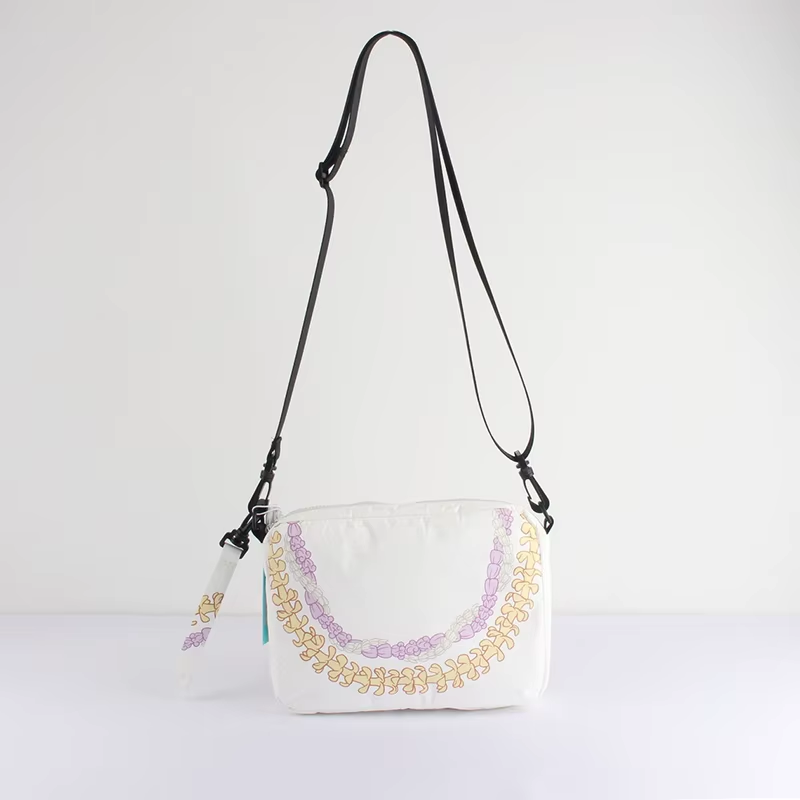
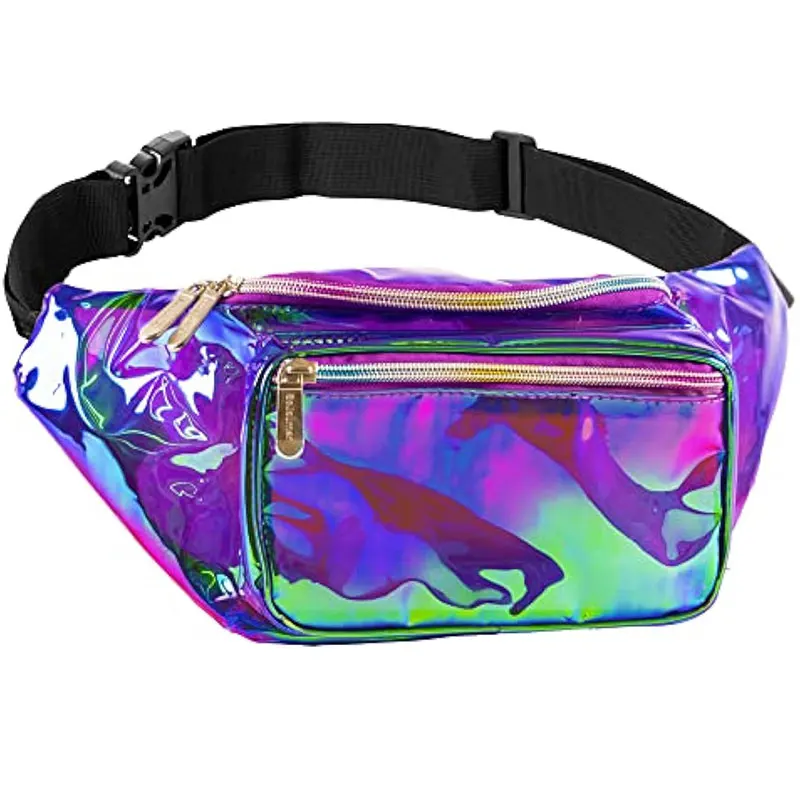
Compact tyvek bags, typically ranging from small hip packs and crossbody pouches to medium-sized totes, work best for situations where you need lightweight, hands-free carrying for a limited set of items. A tyvek waist bag or small crossbody bag, often sized around one to three liters, is ideal for festivals, travel days, and outdoor events where you want to keep a phone, wallet, keys, and maybe a small water bottle close at hand without the bulk of a full-sized bag. The material's natural crinkle texture provides some grip against clothing, which helps the bag stay in place when worn crossbody. For everyday errands, a compact tyvek tote with dimensions around 12 by 14 inches offers enough room for a small grocery run, a trip to the farmers market, or carrying a book and tablet to a coffee shop. At this size, the bag remains extremely lightweight-often under 100 grams-so it can be folded flat and tucked into a larger travel bag or glove compartment as an emergency carry-all. These bags are typically printed with custom designs and logos, making them popular for promotional events where the combination of low cost, visual impact, and practicality creates a memorable giveaway item.
Medium Tyvek Bags for Shopping, Beach, and Daily Use
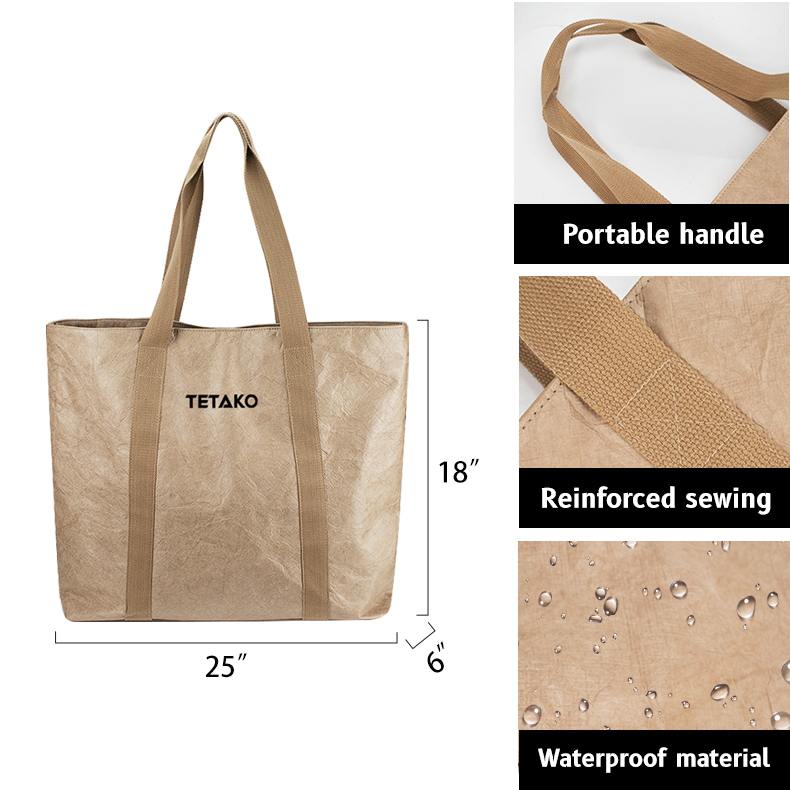
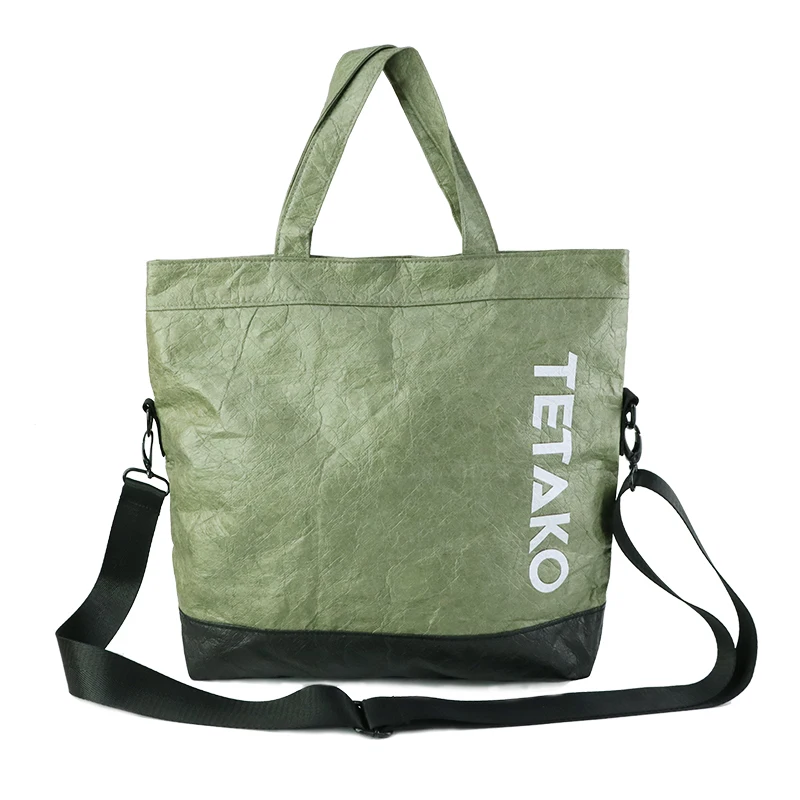
Medium-sized tyvek bags, roughly in the range of 15 by 15 to 16 by 20 inches, represent the workhorse category of tyvek bags. These are sized for grocery shopping, beach trips, gym use, and general daily carry. A 15-by-15-inch tyvek shopping bag can comfortably hold enough groceries for one or two people, with the added benefit that the water-resistant surface prevents condensation from cold items from soaking through and weakening the bag. At the beach, a medium tyvek bag in this size range easily accommodates a towel, sunscreen, a book, and a change of clothes. One significant advantage of tyvek over canvas for beach use is that sand does not embed itself into the material's surface. Canvas, with its rough weave, traps sand grains that will sprinkle out in your car or home for weeks. Tyvek's smoother surface allows sand to be shaken off easily, a practical benefit that regular beachgoers notice immediately. The bag's splash-proof nature also means that wet swimsuits or damp towels can be carried without worrying about moisture damage to the bag or the surfaces it sits on. At this medium size, the bag weight typically remains under 200 grams, maintaining the carrying comfort that is one of tyvek's key selling points.
Large Tyvek Bags for Travel, Laundry, and Bulk Storage
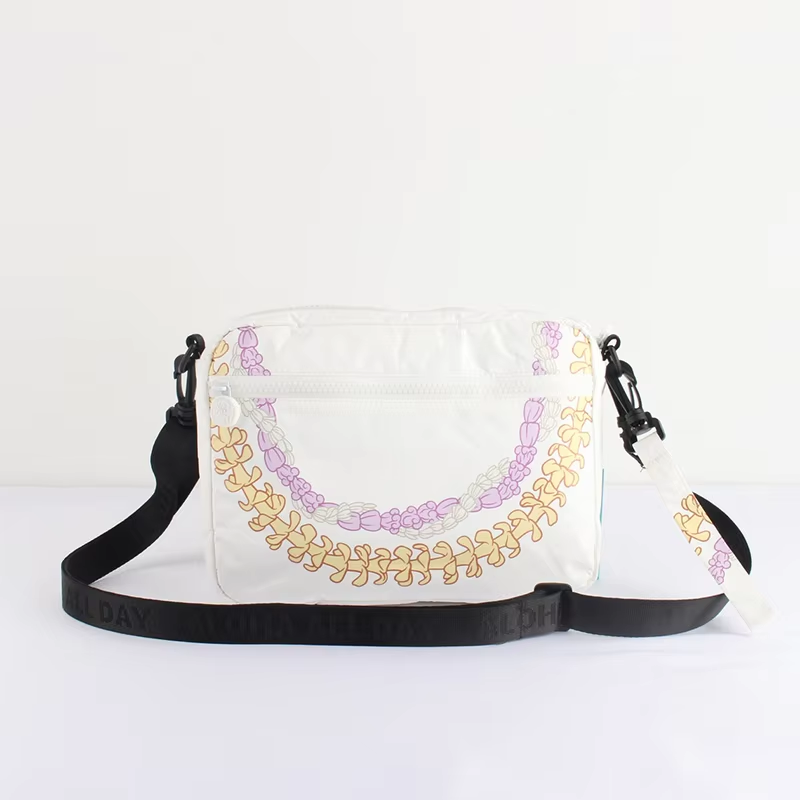
Large tyvek bags, with dimensions that can exceed 20 by 24 inches, serve more specialized purposes where volume matters more than compact portability. These bags work well as travel laundry bags, keeping dirty clothes separate from clean items in a suitcase without adding significant weight. The material's resistance to moisture means damp towels or workout clothes will not transfer humidity to surrounding items. Large tyvek bags are also used as bulk shopping totes for warehouse store trips, event supply transport, and seasonal storage of clothing or bedding. Because tyvek is inherently resistant to pests and mildew, it provides a better storage solution in basements and garages than cotton or canvas alternatives that can attract insects and develop musty odors in humid conditions. At this size, the bag's ability to be printed with full-color custom designs makes it viable as a large-format promotional piece: brands use oversized tyvek bags as reusable gift packaging, trade show swag carriers, or VIP event bags that recipients continue to use long after the event, extending brand exposure over months or years.
Practical Sourcing Considerations for Custom Tyvek Bags
From a manufacturing and procurement perspective, tyvek bag sizing is closely linked to the intended application and printing requirements. A buyer ordering compact tyvek bags for a music festival giveaway will prioritize a different set of specifications than a buyer sourcing medium bags for a retail brand's reusable shopping bag program or large bags for hotel laundry service. When evaluating tyvek bag suppliers, several technical factors affect the final product quality and cost. The weight or thickness of the tyvek material, measured in grams per square meter, determines the bag's durability and feel. Lighter weights around 40 to 50 grams per square meter work well for promotional event bags that will see light, short-term use. Heavier weights of 60 to 80 grams per square meter are better suited for shopping bags and daily-use totes that need to withstand repeated loading and carrying. The printing method also matters: screen printing works well for bold, simple designs on any size bag, while digital or offset printing allows for photorealistic full-color images that take advantage of tyvek's smooth surface. Custom tyvek bags can also be manufactured with additional features such as reinforced handles, gusseted bottoms for standing upright, zipper closures, and internal pockets. Each of these additions affects the final bag weight, folded dimensions, and unit cost, so matching the feature set to the use case is a key part of the sourcing decision.
How to Choose the Right Tyvek Bag Size for Your Needs
Selecting the right tyvek bag size comes down to three practical questions. First, what will you primarily carry? If the answer is a phone, wallet, keys, and one or two small extras, a compact crossbody or waist pack tyvek bag in the one-to-three-liter range is sufficient. If the answer includes groceries, beach gear, or a full day's worth of outing supplies, step up to a medium tote in the 15-by-15 to 16-by-20-inch range. If the bag will be used for laundry, bulk storage, or transporting large quantities of items, a large bag exceeding 20 inches in either dimension is appropriate. Second, how important is portability and packability? Compact and medium tyvek bags fold down to nearly flat and weigh very little, making them ideal as secondary bags carried inside a primary backpack or travel bag. Large tyvek bags are still lightweight for their volume but are less convenient to fold and stow. Third, will the bag serve as a blank canvas for a brand or event message? All tyvek bag sizes accept custom printing, but larger bags provide a bigger visual surface for full-color designs and logos, making them more effective as walking billboards at crowded events or busy shopping districts. Taking the time to match the bag size to both the functional needs and the branding goals, if applicable, ensures that the final product delivers value well beyond its modest cost.
Q: Are tyvek bags machine washable?
A: Tyvek bags can be wiped clean with a damp cloth or sponge, and most can be hand-washed in cool water with mild soap. Machine washing is not recommended because the agitation can break down the fiber structure and cause excessive wrinkling. Air-dry the bag flat after cleaning; do not use a dryer.
Q: How long does a tyvek bag last with regular use?
A: With normal daily use as a shopping or tote bag, a well-made tyvek bag typically lasts one to three years. The material naturally develops a softer texture and some wrinkling over time, which many users find adds character. The bag's lifespan is shortened by overloading beyond its recommended weight limit or frequently carrying sharp-edged items that can puncture the material.
Q: Can tyvek bags be recycled?
A: Yes, tyvek is recyclable in many municipal recycling programs that accept plastic film and bags. Look for recycling drop-off locations that accept polyethylene products. The material is classified as a number 2 plastic, the same category as milk jugs and detergent bottles, though it should be recycled through film collection channels rather than rigid container bins.

 Hot News