Comfort Comes From Position, Tension and Load
Most discomfort from a waist bag comes from one of three causes, and tightening the strap is rarely the cure. The first is position: a waist bag worn too low sits on the hip joint and swings with every step, while one worn too high presses into the ribs. The second is tension. A strap tight enough to stop movement will also restrict breathing and leave marks, and a strap loose enough to be comfortable will let the bag bounce. The third is load, which is where most advice stops. A heavy item placed at the front of the bag pulls the whole bag forward and down, so the wearer tightens the strap to compensate, which creates the pressure problem in the first place. Solving position and load first usually means the strap can be worn noticeably looser, which is why this sequence matters.
Choosing a Wear Position That Suits the Activity
The waist bag has three usable positions, and each one suits different activity. Worn at the natural waist, above the hip bones, the bag stays close to the body's centre of gravity and moves least during walking, running and cycling. Worn on the hip, level with or just below the hip bones, access is faster and the bag does not press on the stomach, which suits casual use where the bag is opened frequently. Worn across the body, with the bag resting on the chest or the small of the back, the load is carried by the torso rather than the waist, which is the most comfortable option for a heavier load or for a long day on foot. The practical rule is to choose the position first and adjust the strap second, because a strap length that works at the waist will not work across the body, and adjusting in the wrong order leaves the bag either too tight or too loose.
How to Set the Strap Correctly
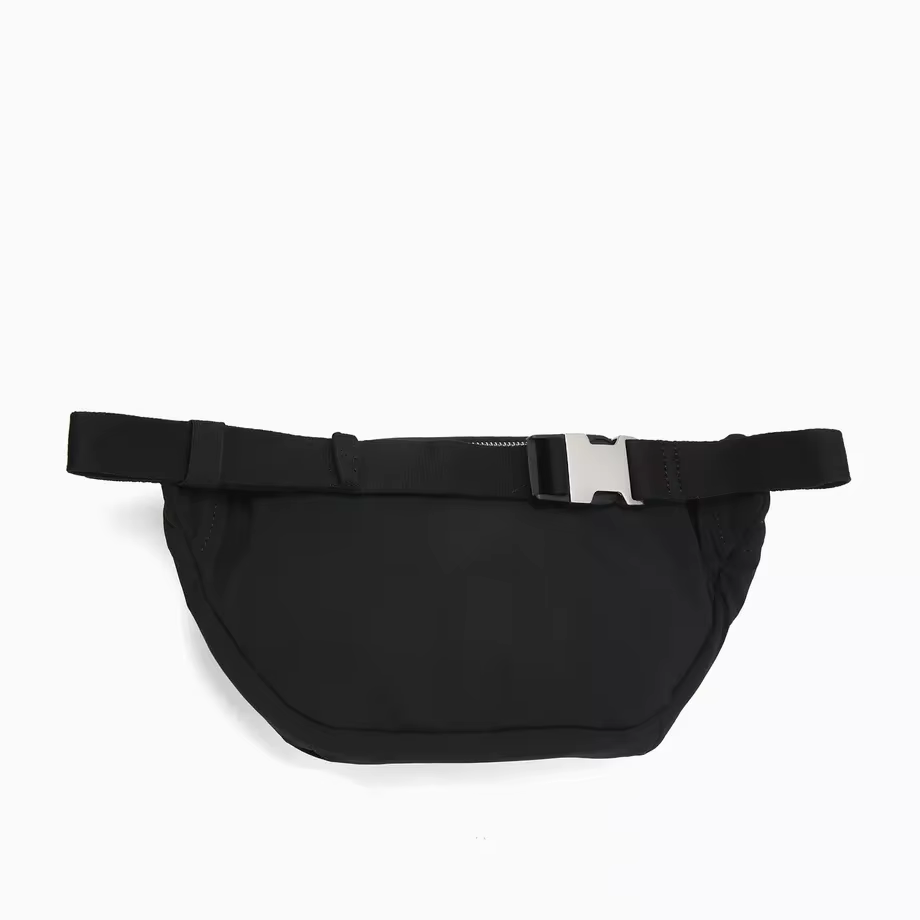
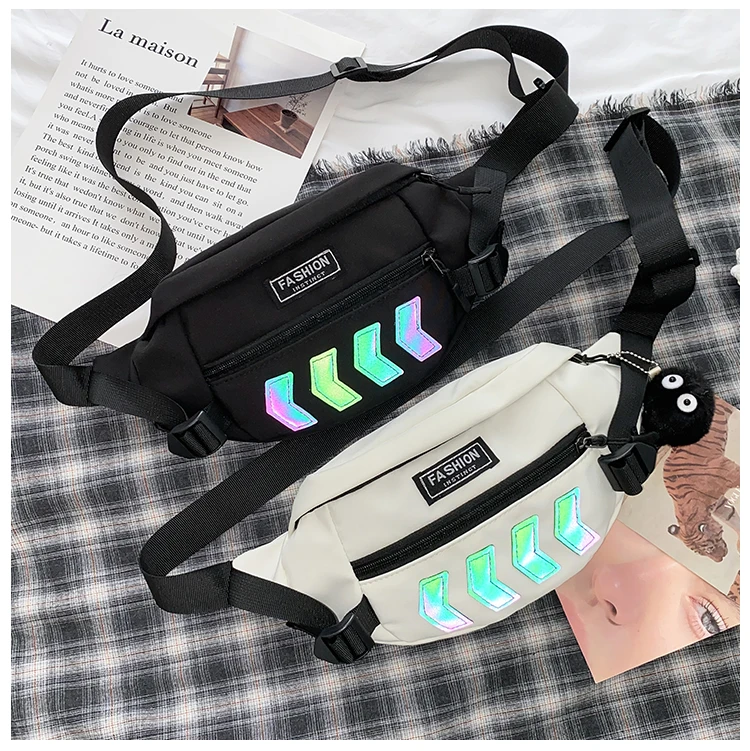
Once the position is chosen, adjusting a waist bag is a short sequence, and the order of the steps is what makes it work. Start with the bag worn at the chosen position and the strap fully loose, then take up slack in small increments until the bag no longer moves when you twist your torso, bend forward or lift one knee. Test at that point rather than while standing still, because a bag that feels secure standing is often loose in motion. The strap should then be checked for evenness, since a strap that is taken up more on one side pulls the bag off centre. On bags with two adjusters, one on each side, the buckle should sit at the centre front or centre back rather than over the hip bone, because a hard buckle pressed against a hip bone becomes uncomfortable within an hour. If the strap end is long after adjustment, a strap keeper or a simple elastic loop prevents it from swinging, which is a small detail that makes a noticeable difference on a run.
Stopping Bounce and Preventing Chafing
Bounce and chafing are the two complaints that follow a badly fitted waist bag, and both have specific causes. Bounce happens when the bag has room to move against the body, which usually means the load is seated too high or too loosely. Moving weight lower in the bag, reducing the number of loose items and taking up strap slack in small steps will settle most bounce. If the bag still bounces at a comfortable tension, that indicates the bag is larger than the load requires, and a smaller body or a slimmer format is the real solution. Chafing is a strap problem rather than a bag problem. Wide webbing distributes pressure better than narrow webbing, so a bag intended for running benefits from a wider strap. Seams, edge binding and hard hardware should not sit against bare skin, and a strap with a smooth finished edge will always be kinder than one with a raw or heat-cut edge. For a waist bag used over very long distances, or by people prone to irritation, a wider strap is a better investment than any adjustment.
A Practical Sourcing Scenario: Specifying Adjustability
Adjustability is often treated as a detail when it is actually a specification. Consider an anonymous programme in which a brand needed a waist bag that would fit a wide range of body sizes without a size run. The specification addressed adjustability directly: a webbing strap with enough total length to cover both waist and crossbody wear, a two-sided adjuster system so the buckle could be positioned away from the hip bone, a strap keeper to manage the loose end, and a wider webbing width because the bag was positioned for running and cycling. Edge finishing was specified as smooth binding rather than a raw cut, because the strap would contact skin. The important shift was treating strap geometry as a design decision taken with the pattern, rather than a component chosen at the end. A specification of this kind can be sampled in three to five working days without branding and seven to nine working days with a logo applied, with a typical minimum of 500 pieces per style and mass production in roughly thirty to thirty-five working days after approval.
Frequently Asked Questions
How tight should a waist bag be?
It should be tight enough that the bag does not shift when you twist your torso, bend forward or lift a knee, and no tighter. Test the fit in motion rather than standing still, and remember that a correctly loaded bag can usually be worn looser than a poorly loaded one. A waist bag that has to be pulled very tight to stay in place is usually carrying its weight badly.
Why does my waist bag keep bouncing?
Bounce usually means the load is sitting too high or the strap is too loose, so the bag has room to move. Move heavier items lower in the bag, reduce loose contents and take up the strap in small increments. If it still bounces at a comfortable tension, the bag is probably larger than the load needs.
Can a waist bag be worn across the body instead of at the waist?
Yes, if the strap is long enough and adjustable on both sides. Crossbody wear shifts the load to the torso, which is usually more comfortable for heavier loads and for long days on foot, but it requires a longer strap than waist wear and a buckle position that avoids pressing on the hip.


 Hot News