The Problem Is That One Hand Is Always Occupied
A mommy bag is not simply a large handbag with a different label. It exists because a parent's carrying requirements change in a specific way: one hand is usually holding a baby, a bottle or a stroller handle, which makes two-handed bag handling unworkable. That single constraint reorders every design priority. A bag that must be opened, searched and closed with one hand needs a wide main opening, an interior that is visible without digging, and an exterior pocket positioned where a free hand naturally falls. Volume matters less than access, because the most common failure is not a lack of space but an inability to reach the right item quickly while a baby is crying. Parents who try to make a standard tote work usually reach the same conclusion: the problem is not capacity, it is that the bag was never designed to be used one-handed.
What Actually Needs to Be Carried
The load a new parent carries is unusual because it combines bulk, wetness and temperature control in a single trip. A typical outing involves nappies and wipes, a change of baby clothing, a bottle or a feeding set, a muslin or two, a changing mat, a dummy, a drink and snack for the parent, keys, phone and a cardholder. Two of those categories need separation from the rest. Wet or soiled items have to be isolated so they do not contaminate clean clothing and feeding equipment, and bottles often need to be kept warm or kept cool depending on the plan for the day. That is why the useful way to judge a mommy bag is not by how many pockets it has but by whether it separates three zones: dry clean items, wet or soiled items, and items that need temperature control. A diaper bag that mixes those three together will be reorganised by the parent after the second outing, and usually replaced after the fifth.
Structural Requirements Worth Specifying
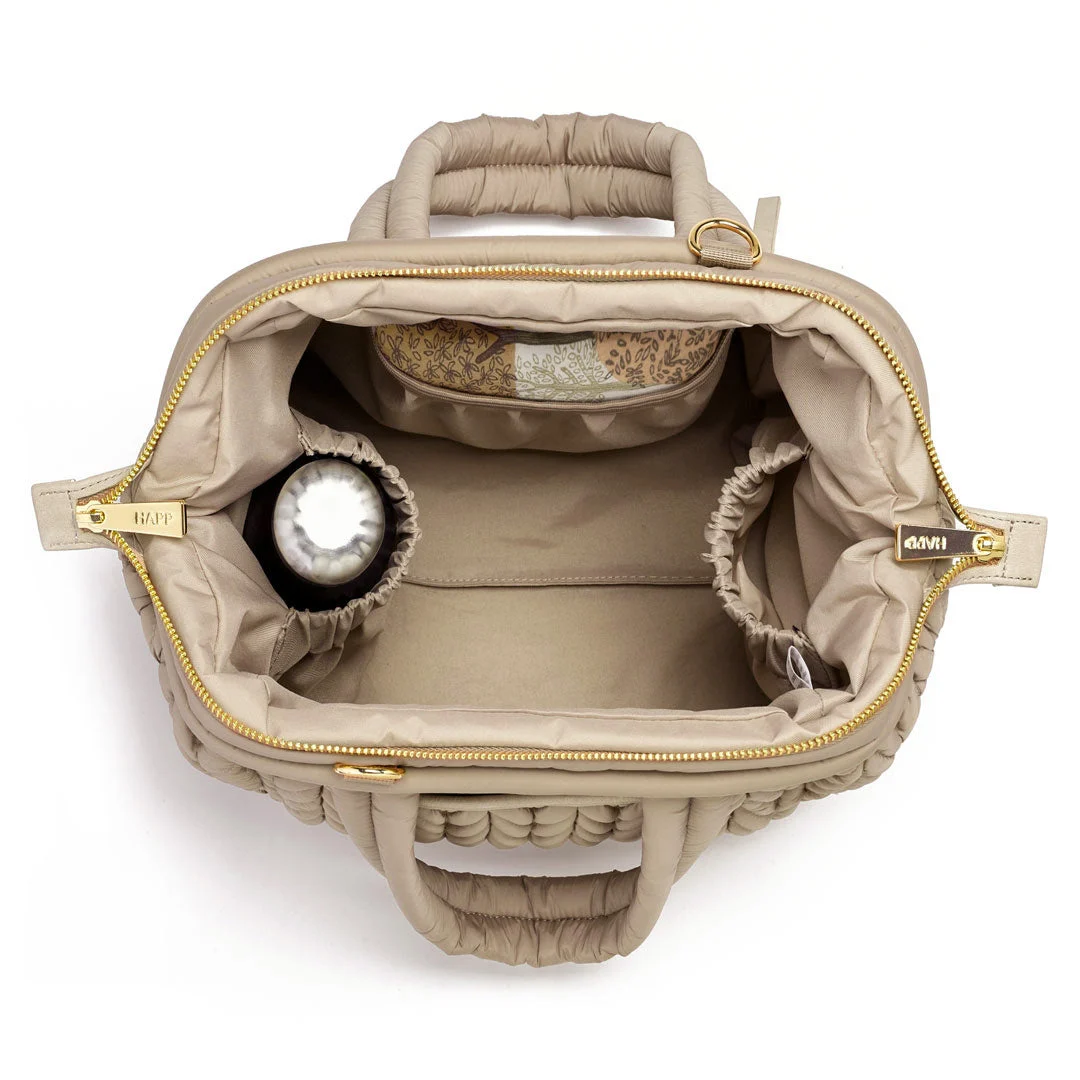
Once the zones are defined, the specification becomes concrete. The main opening should be wide enough that a nappy can be removed without emptying the bag, and a light-coloured interior helps, because a dark lining in poor lighting turns every search into guesswork. A wipe-clean lining is more valuable here than in almost any other bag category, because a leaking bottle in a pushchair or a spilled puree arrives as a routine event rather than an accident. An insulated bottle pocket should be positioned so that it does not sit directly against the baby's clothing zone. At least one exterior pocket should be reachable without opening the main compartment, sized for a phone and keys. On the carry side, the bag should offer more than one wear mode: shoulder straps for walking, a longer strap for carrying over a pushchair handle, and attachment points for stroller clips. Padded straps matter more than they appear to, because the bag is often carried with the other shoulder already holding a bag or a child, so all the load sits on one side. Finally, the base and the handle anchors should be reinforced, since this is a bag that will be put down on pavements and lifted by one handle while loaded.
Compliance and Safety Documentation
For brands selling into regulated markets, a mommy bag sits close enough to infant use that documentation is part of the brief rather than a formality. Material compliance documentation should be reviewed before an order is confirmed, not after delivery, and the specific materials used should be the ones that were tested. Certification coverage varies by product and market, and the correct approach is to ask what was actually tested rather than to rely on a general quality claim. Where a bag includes accessories such as a changing mat or a bottle holder, each accessory may fall under its own requirements, and buyers should confirm the scope of the documentation covers every component being shipped. A mommy bag that treats those items as a set therefore needs its document scope checked component by component, not as a single line item.
A Practical Sourcing Scenario: One Platform, Several Styles
Mommy bag ranges are usually built as a family rather than a single product, because parents buy more than one. Consider an anonymous retail programme that needed a basic day bag, a larger weekender and a compact stroller bag, all recognisable as one line. The three shared a single shell fabric, a single lining specification, a single zipper type and a single colour reference, so a store display looked like a range and the factory could buy material once. The day bag used a shoulder strap and two internal dividers, the weekender added a fold-out change mat pocket, and the compact version used stroller clips and a reduced depth. Because the lining and shell were common to all three, the wipe-clean testing done on one style applied to the others. A brief of this kind is commonly sampled in three to five working days without branding and seven to nine working days with a logo applied, with a typical minimum of 500 pieces per style and mass production in roughly thirty to thirty-five working days after approval.
Frequently Asked Questions
Is a mommy bag different from a normal large handbag?
Yes, in three practical ways. It is designed to be used with one hand, it separates wet items from clean items, and it offers more than one carry mode so it can be worn on the body or over a pushchair handle. A large handbag can hold the same items but usually cannot separate or reach them as quickly. A baby bag designed around one-handed use does both.
What should a mommy bag have for wet and soiled items?
A separate, washable compartment or a removable wet pouch is the most practical solution, paired with a wipe-clean lining in the main body. Keeping soiled items in a sealed section prevents odour and contamination reaching clean clothing and feeding equipment.
Can mommy bags be ordered with a stroller attachment?
Yes, and stroller clips or attachment loops are a common specification rather than an accessory. For a mommy bag, the attachment method should be decided alongside the strap system rather than added afterwards, because both determine how the load is carried. It is worth confirming the attachment method and the tested weight it is designed to hold, and asking whether the documentation covers the bag together with any included accessory items.



 Hot News