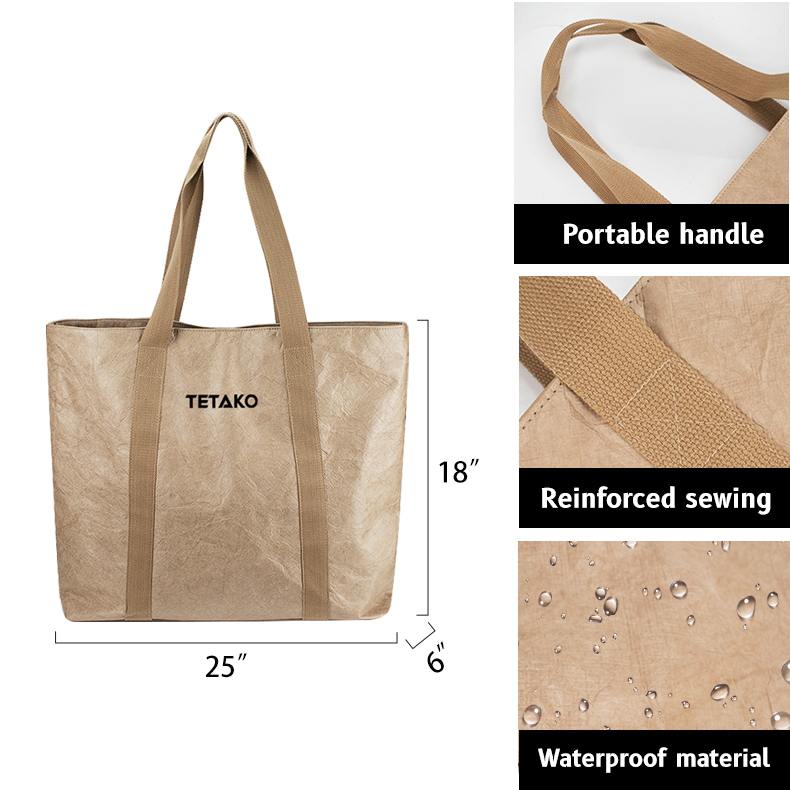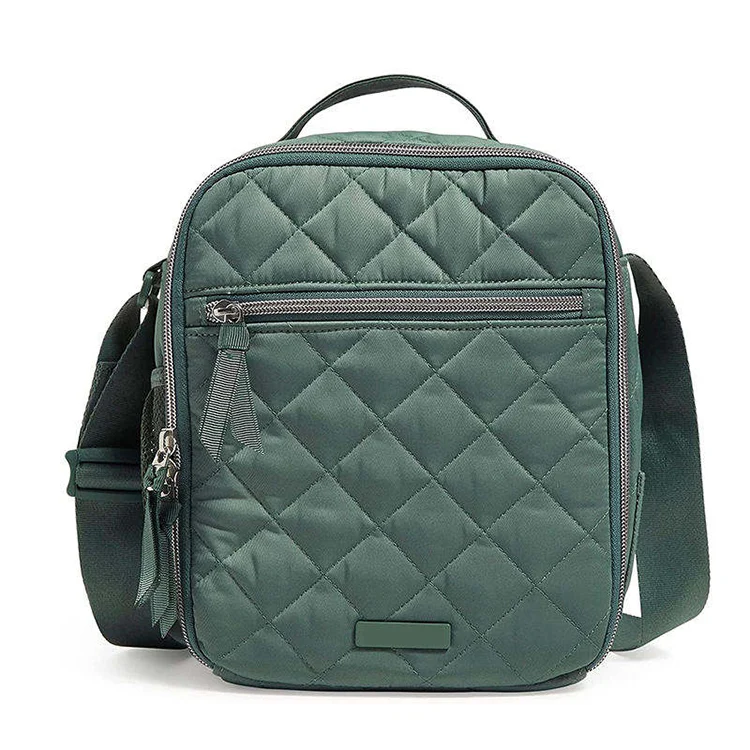
A puffy bag is defined by its quilted, cushioned body, but the material that covers that cushioning determines whether the bag survives a rainy commute, a snow shower, or a splash at a café. Water resistance is one of the most frequently asked questions about puffy bags, and the answer depends on three separate layers: the outer shell fabric, the insulation inside, and any coating or treatment applied to the shell. Nylon and polyester dominate the market, but they perform differently, and the type of fill matters just as much as the shell when moisture gets involved. Understanding how these materials behave when wet, what a durable water-repellent finish actually does, and how to match the material to your use case will help you choose a puffy bag that looks good and stays dry where it counts.
What Water Resistance Means for a Puffy Bag
Water resistance is not the same as waterproofing, and the distinction matters for puffy bags. A water-resistant bag sheds light rain, snow, and splashes for a limited time, but it is not sealed against immersion or heavy downpours. A fully waterproof bag, by contrast, uses a sealed membrane or coating and taped seams, which adds weight and stiffness that work against the soft, lightweight character of a puffy bag. Most puffy bags aim for water resistance rather than full waterproofing, which is a reasonable trade-off for everyday use: the bag shrugs off weather long enough for you to get indoors, and the quilted padding gives some extra protection to the contents. The key is to know exactly what level of protection the material offers, because a bag labeled simply as nylon may shed water far differently from the same nylon with a quality water-repellent finish.
Nylon vs. Polyester: The Two Main Puffy Bag Shells
Nylon and polyester are the standard outer shell materials for puffy bags, and each has strengths relevant to water resistance. Nylon is prized for its strength-to-weight ratio: it is tough, flexible, and resists abrasion, which is why it appears in many puffer-style bags and outdoor gear. Nylon absorbs a small amount of water, so its water resistance improves significantly when it carries a durable water-repellent coating, and quality nylon shells are treated at the factory to shed moisture. Polyester is naturally more hydrophobic: it absorbs very little water, dries quickly, and holds its shape well, making it a dependable choice for bags that will see regular wet weather. In practice, both materials work well for a puffy bag when treated properly, and the choice often comes down to feel and durability: nylon tends to feel softer and more supple, while polyester offers crispness and faster drying. The fabric's denier also matters, since a denser weave resists water penetration better than a loose one regardless of fiber type.
Synthetic Fill vs. Down: What Happens When They Get Wet
The insulation inside a puffy bag is where water resistance decisions really play out. Down is the classic premium fill: it offers excellent warmth-to-weight and compresses beautifully, which is why it appears in high-end jackets and bags. But down has a critical weakness in wet conditions: it loses nearly all of its insulating ability when wet, clumps together, and takes a long time to dry, which is why down-filled bags require careful weather protection and special care. Synthetic fills, typically polyester fiberfill, are the practical choice for a puffy bag meant to see rain and snow. Synthetic insulation absorbs little water, keeps its loft and warmth even when damp, and dries quickly, which is why most everyday puffy bags use it. For a water-resistant puffy bag, synthetic fill is the safer foundation: even if moisture works its way past the shell, the bag keeps performing, and recovery is as simple as letting it dry.
Coated and Treated Fabrics: DWR and Beyond
The difference between a water-shedding shell and a soaking one is usually a treatment. A durable water-repellent (DWR) finish makes water bead up and roll off the fabric instead of soaking in, and it is applied to nylon and polyester shells during production. The word durable matters: DWR wears off over time with washing and abrasion, and the treatment can be refreshed with a spray-on or wash-in water-repellent product when it stops beading. Some puffy bags go further with a laminated waterproof membrane, which blocks water entirely but changes the hand feel and breathability. For most everyday puffy bags, a quality DWR-finished nylon or polyester shell is the sweet spot: it handles the rain, snow, and spills a bag actually encounters, while staying soft, light, and comfortable to carry. When comparing materials, ask whether the shell is DWR-treated, how the bag should be cleaned to preserve the finish, and whether the treatment can be reapplied.
Choosing a Water-Resistant Puffy Bag for Your Use Case
Matching the material to how you will actually use the bag is the final step. For an urban commuter who walks in light rain and snow, a DWR-finished nylon or polyester puffy bag with synthetic fill offers the best balance of weather protection, weight, and care simplicity. For outdoor use in heavier weather, look for a bag with a more robust shell, a higher-denier fabric, and possibly a water-resistant lining inside the main compartment to protect the contents directly. For purely indoor or dry-climate use, material choice matters less, and softness and style can take priority. Also consider what the bag carries: a puffy bag used for a laptop or camera benefits from a water-resistant inner lining as a second line of defense, while a bag used for clothing or gym items can rely on the shell alone. Wherever you land, check the care instructions before buying, because how you wash and dry the bag determines how long its water resistance lasts.
Q: Is nylon or polyester better for a water-resistant puffy bag?
A: Both work well when treated with a durable water-repellent finish. Polyester absorbs less water and dries faster, while nylon is stronger and softer; for most everyday puffy bags, the deciding factors are feel, durability, and whether the shell is DWR-treated.
Q: Can I make my puffy bag water-resistant again after washing?
A: Yes. If water stops beading on the shell, refresh the DWR treatment with a spray-on or wash-in water-repellent product designed for nylon and polyester, following the product instructions and the bag's care label.
Q: Why is down not recommended for wet-weather puffy bags?
A: Down loses most of its insulating ability when wet, clumps, and dries slowly. Synthetic fills such as polyester fiberfill absorb little water and keep their warmth when damp, which is why they are the standard for puffy bags that see rain and snow.
Q: What is the difference between water-resistant and waterproof puffy bags?
A: Water-resistant bags shed light rain and splashes but are not sealed; waterproof bags use a laminated membrane and taped seams to block water entirely. Waterproof construction is heavier and stiffer, so most puffy bags choose water resistance for everyday comfort.


 Hot News