Winter changes the rules of everyday carry. Gloves make zippers harder to manage, bulky coats make shoulder straps slip, and the last thing anyone wants is a stiff leather tote that feels like an ice pack against their side. The puffer tote bag has risen to the top of the winter accessory list for a simple reason: it was designed around cold-weather realities rather than around fashion seasons. Its quilted, insulated body keeps contents protected from the chill, its lightweight construction sits comfortably over heavy coats, and its soft texture turns a practical necessity into something genuinely pleasant to carry. Understanding why the puffer tote bag performs so well in winter, from the materials that give it warmth to the dimensions that make it practical, explains why it has become a seasonal staple rather than a passing trend.
Why Winter Is the Season the Puffer Tote Bag Was Made For
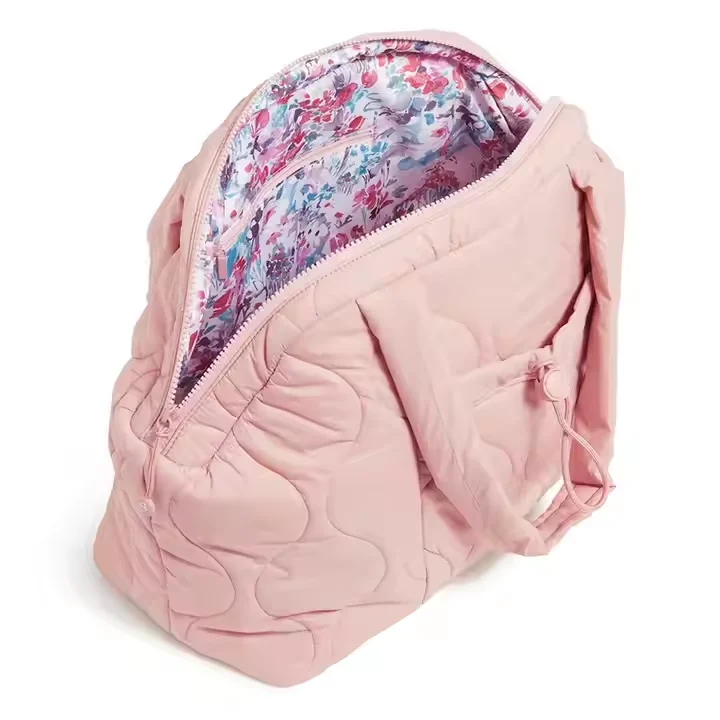
The puffer tote bag's defining feature is its quilted construction: insulation material is stitched into small compartments, often in diamond or channel patterns, which prevents the filling from shifting and creates the signature puffy look. This construction has a functional purpose in winter. The trapped air inside the quilted chambers acts as an insulating layer that slows heat transfer, which means the bag itself stays warmer to the touch and provides a cushioning layer between your body and cold items carried inside. On a freezing commute, a puffer tote does not conduct cold the way metal-trimmed or hard-sided bags do, and its soft structure conforms to your side instead of digging into it. The winter advantage is also practical: puffer bags are lightweight even when empty, so they add little bulk on top of a winter coat, and the padded body protects fragile items like a laptop or camera from the bumps of crowded transit in ways a thin canvas tote cannot.
The Materials Behind the Cozy Look
A puffer tote bag that claims winter performance needs the right material combination. The outer shell is typically nylon or polyester, chosen for its lightweight strength and water resistance; a durable water-repellent finish helps the bag shrug off light snow and drizzle before it reaches the contents. The insulation inside is usually polyester fiberfill, which provides warmth without the weight of heavier materials and keeps its loft over years of use. One advantage of synthetic insulation in a winter tote is that it retains warmth even when damp, unlike natural down, which loses its insulating ability when wet and is more difficult to care for. Stitching quality matters as much as materials: the quilted channels must be sewn with consistent tension so the filling stays evenly distributed and the puffy silhouette keeps its shape. When evaluating a puffer tote for winter use, check the shell's water-repellent treatment, the type of fill, and the stitching density, since these three details determine both warmth and durability in wet, cold conditions.
Practical Capacity: What a 15 by 13 by 7.5-Inch Puffer Tote Carries
Fashion matters, but a winter bag also has to work. A common puffer tote dimension, about 15 by 13 by 7.5 inches, strikes the balance between a handbag and a weekender: large enough for a tablet, a light sweater, a water bottle, and daily essentials, yet compact enough to stay comfortable on the shoulder through a day of errands. The soft body means the bag flexes to fit whatever you carry, but it also means internal organization is the buyer's responsibility: look for models with an interior pocket or zip compartment so keys and phone do not sink to the bottom. For winter specifically, the extra depth is useful for gloves, a scarf, and a beanie that get peeled off and stuffed inside as temperatures rise indoors. Because the tote is shoulder-carry by design, verify the strap attachment is reinforced at both ends, since a loaded winter bag with coats and accessories can be heavier than it looks.
Styling and Versatility: From Commute to Holiday Events
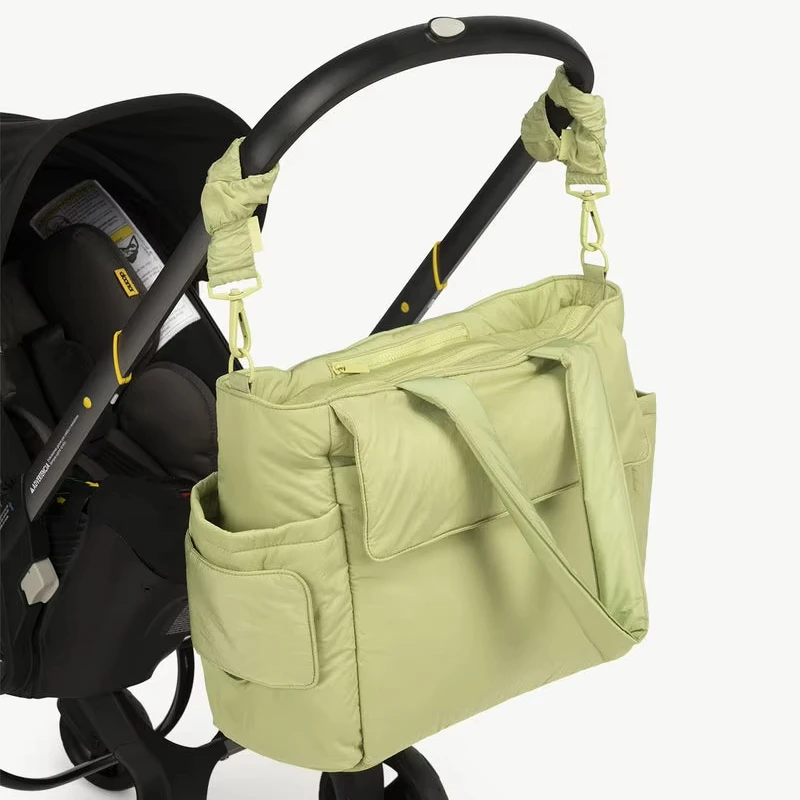
The puffer tote bag earns its must-have status because it moves through winter settings without looking out of place. It works with a puffer jacket and jeans for the morning commute, dresses up over a wool coat for holiday gatherings, and reads as intentional style rather than an afterthought. The quilted texture adds visual interest to the plainest winter outfit, which is one reason the silhouette has spread from niche fashion to mainstream retail. Colors also matter in winter: neutral tones like black, beige, and gray coordinate with the season's heavier palette, while brighter shades make a deliberate statement against gray winter skies. For parents and commuters, the soft, unstructured body is forgiving: it does not scratch car seats, does not clatter against door frames, and can be tucked under an arm when both shoulders are already occupied by a coat and a second bag.
A Sourcing Scenario for Brands Adding Puffer Totes to a Winter Line
For brands considering a puffer tote for their winter assortment, the product decisions map directly to the features above. Specify the shell fabric and its water-repellent treatment, the insulation type and fill weight, and the exact dimensions, since puffer bags are often offered as a customizable size. Confirm the strap construction and hardware: reinforced stitching at stress points and smooth zippers matter more in winter, when gloves make handling clumsy. Customization options such as silk screen printing, embroidery, or a woven label let brands put their mark on the bag without interfering with the quilted surface. In our experience manufacturing custom quilted puffer bags, minimum order quantities such as 300 pieces make it feasible for mid-size brands to test a winter line without overcommitting inventory, and samples are the fastest way to verify that the loft, the finish, and the strap attachment all meet the brand's standard before a full production run.
Q: Is a puffer tote bag warm enough to protect electronics in winter?
A: The quilted padding provides cushioning and some insulation from cold, which helps protect a laptop or tablet from temperature swings during a commute. It is not a thermal case, so do not rely on it for extreme cold storage, but it is a genuine improvement over an unpadded tote.
Q: Can a puffer tote bag survive snow and rain?
A: Most puffer totes are made with water-resistant nylon or polyester, and a durable water-repellent finish helps shed light snow and drizzle. In heavy rain, the bag is not fully waterproof, so protect it with a cover or keep contents in a dry pouch.
Q: Will the puffy look flatten over time?
A: With quality polyester fiberfill and consistent stitching, a puffer tote keeps its loft for years. Avoid machine washing and compression storage, which can flatten the fill; spot-clean and store the bag loosely to preserve the quilted silhouette.
Q: Can a puffer tote be customized for a brand?
A: Yes. Custom puffer tote bags can be produced in specific sizes, shell colors, and insulation types, with branding applied through silk screen printing, embroidery, or woven labels, which is why they are a popular option for seasonal brand collections.


 Hot News