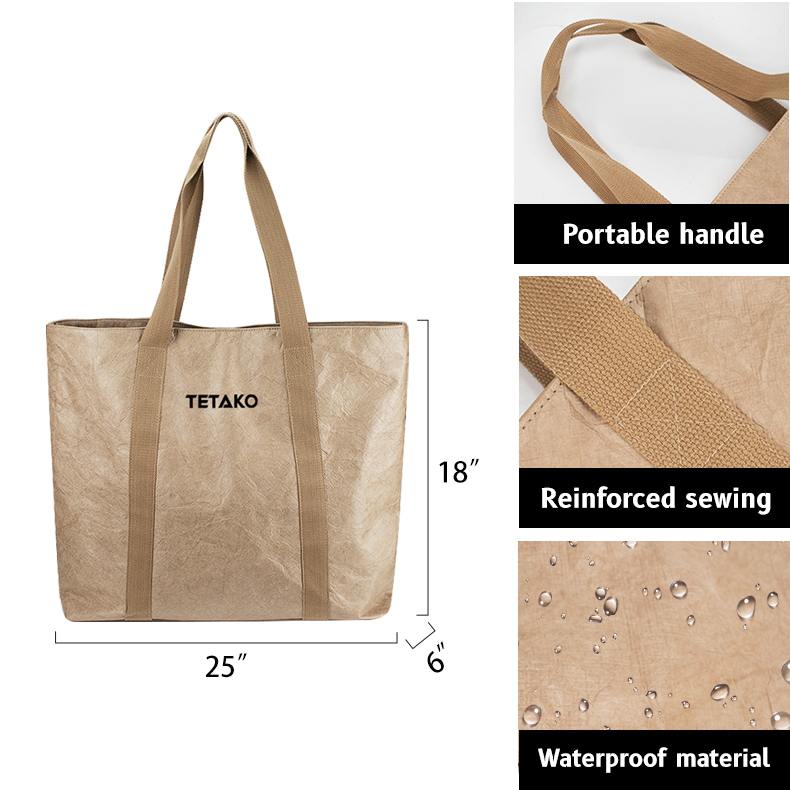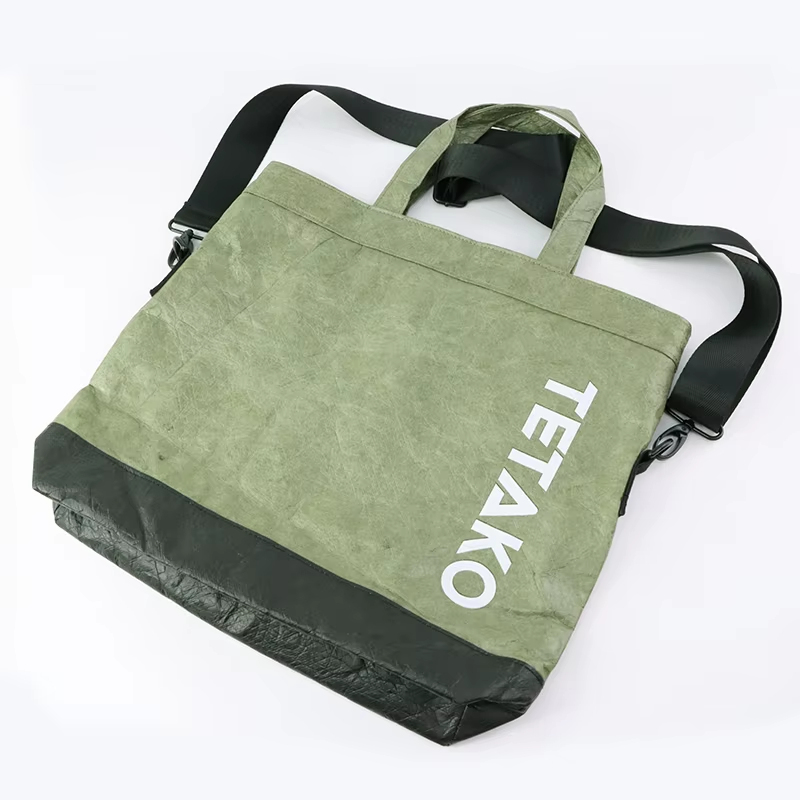
Every material has a story behind its performance, and the durability and water resistance of tyvek bags are not marketing claims but consequences of how the material is made. Tyvek is created through a process called flash spinning, in which high-density polyethylene is dissolved and extruded through tiny openings under pressure, producing ultra-fine continuous fibers that are laid down and bonded into a single sheet. That sheet has a structure unlike woven fabrics or films, and it is this structure that explains why a thin tyvek bag can shrug off tearing, why water beads on its surface, and also why it remains breathable rather than becoming a sealed plastic pouch. Understanding the mechanism behind these properties matters for anyone choosing tyvek bags, because it separates realistic expectations from overstated ones and helps buyers evaluate quality when comparing suppliers.
What Flash Spinning Creates
The manufacturing process is the foundation of tyvek's behavior. In flash spinning, polyethylene polymer is dissolved in a solvent and forced through spinneret openings at high pressure and temperature. The rapid pressure drop causes the solvent to flash off, and the polymer forms continuous micro-fibers that bond to each other where they touch, creating a dense, sheet-like web. The result is not a woven fabric, where yarns cross at right angles, and not a film, where material is continuous and impermeable. It is a non-woven structure of entangled fibers, and every characteristic of a tyvek bag, from its toughness to its feel, traces back to this fiber web. The fibers give the sheet strength in all directions, the bonding gives it integrity, and the spaces between fibers give it its distinctive water and air behavior.
Why Tyvek Resists Tearing
Tear resistance is where the fiber structure shows its advantage most clearly. In a woven fabric, a tear tends to follow the yarns and can run along a row of threads, especially if the weave is loose. In a paper sheet, fibers are short and bonded only lightly, so a tear travels easily. In tyvek, the continuous polyethylene fibers are entangled and bonded across the entire sheet, so there is no weak direction and no point where a tear can easily propagate. When tyvek does tear, the material tends to stop the tear from running, because the force is absorbed by surrounding fibers that are not aligned in any single direction. This is why tyvek bags hold up under the kinds of stresses that defeat other lightweight materials: being stuffed full, dragged across surfaces, and handled repeatedly. The trade-off of this structure is that tyvek has a distinct, slightly crinkly hand feel, quite different from soft woven fabrics, and it creases visibly with use.
How Water Resistance Works: Beading Without Sealing
Water resistance in tyvek comes from the same fiber web that provides its strength, and the mechanism is surprisingly elegant. Tyvek is treated during manufacturing so that its fiber surfaces resist wetting: water molecules are strongly attracted to each other and weakly attracted to the fiber surface, so droplets form beads that sit on top of the material rather than spreading and soaking in. The fiber web is dense enough that under normal conditions, liquid water cannot find a path through the sheet. At the same time, the web is not a solid film: there are microscopic air spaces between the fibers, large enough for water vapor molecules to pass through but not for liquid water droplets. This is why a tyvek bag can keep rain and spills out while still letting contents breathe, and why damp items placed inside do not turn the bag into a sealed, mold-prone environment. The structure also explains the boundary: under sustained pressure, such as sitting on a fully packed bag in the rain or submerging it, liquid water can be forced through the web.
Water-Resistant vs. Waterproof: Knowing the Boundary
Understanding the mechanism makes the practical boundary clear. A tyvek bag is water-resistant: it sheds water in normal use, beads off rain and spills, and protects contents from damp surfaces, all while staying breathable. It is not waterproof in the sense of a sealed PVC or coated film bag, which blocks liquid water entirely but also traps moisture inside. The practical implication is that tyvek bags are excellent for the weather a bag actually meets: light rain between car and door, a splash at a picnic, a damp bench or beach towel. They are not designed to be submerged or to sit under heavy water pressure for extended periods. Buyers who need full waterproofing should look at sealed-film bags instead, accepting the added weight, stiffness, and trapped-moisture trade-offs. Choosing the right material for the real use case is exactly the kind of decision that separates informed buyers from disappointed ones.
How Durability and Water Resistance Are Tested
For anyone evaluating tyvek bags at purchase scale, the relevant question is how performance is verified. Tear and tensile strength are tested by applying controlled force to samples and measuring the load at failure, and reputable suppliers can share test data or certifications for the tyvek grade they use. Water resistance is commonly evaluated with a water column or spray test, which measures how much water pressure the material withstands before penetration, and with beading tests that check the surface treatment's effectiveness. Because tyvek comes in different grades and basis weights, the same bag design can vary significantly in performance depending on the material selected, so buyers should confirm the specific tyvek grade, not just the word tyvek, in the product specification. A practical in-house check is simple: pour water onto the bag surface, observe beading, and apply light finger pressure to see whether water is forced through. This quick test, combined with supplier documentation, gives a realistic picture of what the bag will do in the field.
Q: Why is tyvek bag material breathable but water-resistant?
A: The flash-spun fiber web is dense enough to block liquid water droplets but contains microscopic air spaces large enough for water vapor to pass through, so the material sheds water while letting contents breathe.
Q: Does tyvek lose its water resistance over time?
A: Tyvek's water resistance is a property of the fiber structure and surface treatment, and it remains effective through normal use. Abrasion and heavy creasing can affect the surface, so treat the bag reasonably and avoid folding it sharply in the same place repeatedly.
Q: Can tyvek bags be submerged in water?
A: No. Tyvek is water-resistant, not waterproof: sustained immersion or heavy pressure can force water through the fiber web. Keep tyvek bags out of standing water and use sealed-film bags for full waterproofing.
Q: Are all tyvek bags equally durable?
A: No. Tyvek comes in different grades and basis weights, and a bag's durability depends on the specific material used and the bag's construction, including seams and handles. Confirm the tyvek grade and construction details with the supplier.

 Hot News