What Counts as a Hidden Pocket
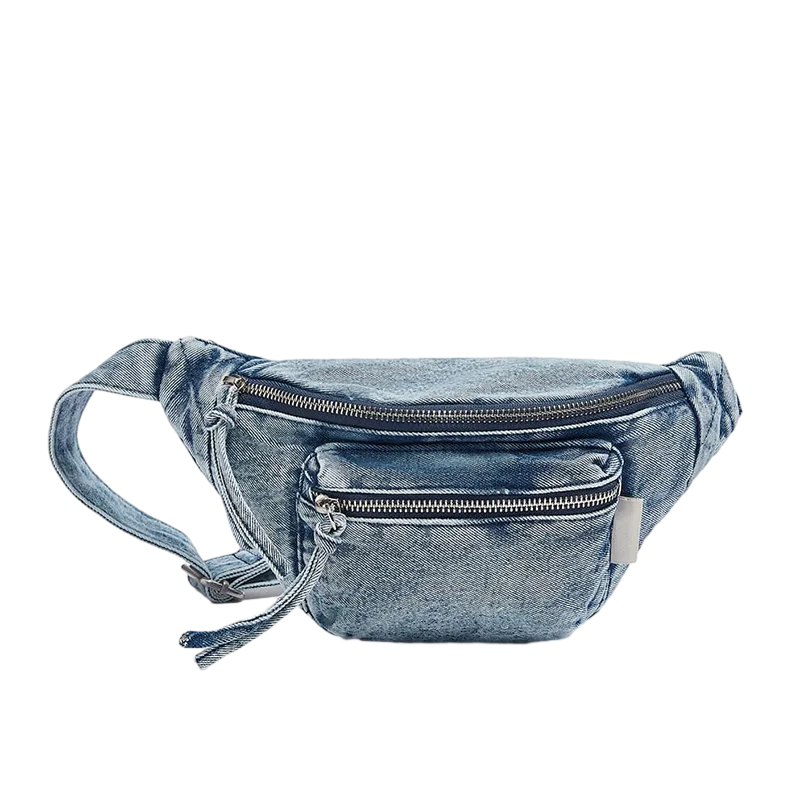
The phrase hidden pocket covers several different things, and a waist bag can have one, several or none, no matter what the product listing claims. The clearest working definition is a pocket that is not visible from the outside and cannot be opened without deliberately reaching into the bag. On a waist bag, that usually means one of four constructions: a flat rear pocket pressed against the wearer's body, an inner slip pocket sewn into the lining, a second zip positioned immediately behind the main zip so the bag reads as having a single closure from outside, or a sleeve tucked inside a larger compartment such as a bottle pocket or a false-bottom section. A rear panel pocket on a sling worn across the chest does the same job from a different direction. Knowing which construction a listing describes matters, because these options differ widely in capacity, in how fast the pocket can be opened, and in what they can realistically hold.
Rear and Body-Side Pockets: The Most Secure Position
A pocket on the rear panel, the side that sits against the wearer's body, is the hardest one for anyone else to reach, because opening it requires the bag to be lifted away from the body first. That makes it the natural home for a passport, a spare card, a key or emergency cash. The trade-off is access speed: the wearer has to move the bag to reach the pocket, which is inconvenient in a queue and awkward while wearing a backpack over the same shoulder line. Two specification details decide whether this pocket is usable rather than merely present. The first is depth relative to the zip: a rear pocket with a shallow body will let a passport corner ride against the zip and eventually abrade it. The second is thickness, because a fully loaded rear panel pocket pushes the bag away from the body and makes the whole bag feel bulky. On a waist bag built for travel, the rear pocket is usually the feature buyers ask about first, so it is worth examining before anything else. A flat rear pocket works best when it is sized for documents and cards rather than for a phone.
Inner Lining Pockets and Concealed Second Zips
A slip pocket sewn into the lining is the least secure of the options but the easiest to use, because it is reached through the main opening and needs no extra hardware. It also adds almost no cost, which is why it is common on waist bags at every price level. Its weakness is that anyone who opens the main compartment has immediate access to it, so it hides contents from casual view rather than from a determined hand. At a lower price point, this is often the only concealed option a waist bag offers, which is one reason it appears on so many specifications. A concealed second zip sits between these extremes. Because the second zip is placed directly behind the first, the closure line looks like a single zipper from outside, and a pickpocket has to locate and open a zip that appears not to exist. The design constraint is space: the concealed compartment can only be as deep as the gap between the two zips, so it holds cards, notes and a key but not a phone. A further variation places the concealed pocket behind the back panel padding, which combines the security of a rear pocket with a softer contact surface against the body.
What to Verify Before Ordering
Because hidden pockets are easy to claim and hard to see, a buyer should verify them through specification rather than through photographs. Four checks do most of the work. Count the zippers: a waist bag described as having a concealed pocket should have more zipper pulls than visible zipper openings, and that difference is the clearest single indicator. Check the stated depth of each pocket against what it is meant to hold, since a listed pocket that is twelve millimetres deep will not take a passport. Check whether the lining is finished, because an unfinished lining inside a hidden pocket will fray against whatever is stored in it. Finally, check where the concealed zip sits against the body, because a zip or a metal pull positioned exactly on the hip bone is a comfort problem that no amount of adjustment will fix. Where a supplier offers RFID-blocking material for card storage, ask which layer provides the shielding and whether the shielding is present in the hidden pocket or only in the main compartment, because the two are often not the same.
A Practical Sourcing Scenario: Specifying a Concealed Pocket Properly
Hidden pockets are frequently added late in a product development cycle, which is exactly when they cause the most problems. Consider an anonymous programme in which a travel-accessory brand needed a waist bag with a concealed card pocket for a commuter and travel audience. The first sample placed the concealed pocket behind the main zip, which looked correct in photographs but left only a shallow gap that could not hold a passport or a folded note. The second version moved the pocket behind the back panel, added a lockable pull to the main zip and specified a lining that would not fray. The important change was not the pocket but the sequence: the pocket was defined in the specification before the pattern was cut, with dimensions and contents agreed in writing, rather than being retrofitted after the shell had been finalised. As a planning reference, a specification of this kind can be sampled in three to five working days without a logo and seven to nine working days with branding, with a common minimum of 500 pieces per style and mass production in roughly thirty to thirty-five working days after approval.
Frequently Asked Questions
How many hidden pockets does a waist bag normally have?
There is no standard. A basic waist bag may have one inner slip pocket, while a travel-focused model often combines a rear body-side pocket with a concealed second zip. More pockets are not automatically better, because each one adds structure and thickness at the cost of the bag sitting flat against the body.
Is a rear pocket or an inner lining pocket more secure?
A rear body-side pocket is more secure, because it cannot be opened while the bag stays flat against the wearer. An inner lining pocket is easier to reach but is accessible to anyone who opens the main compartment, so it hides contents from view rather than protecting them.
Can a concealed pocket be added to a custom waist bag?
Yes, and it should be specified before the pattern is cut rather than added afterwards, because the available depth depends on how the layers are assembled. Depth, contents, zipper type and lining should all be confirmed in writing, and a sample should be approved before mass production begins.

 Hot News