Paddle Protection Is the Feature Everything Else Serves
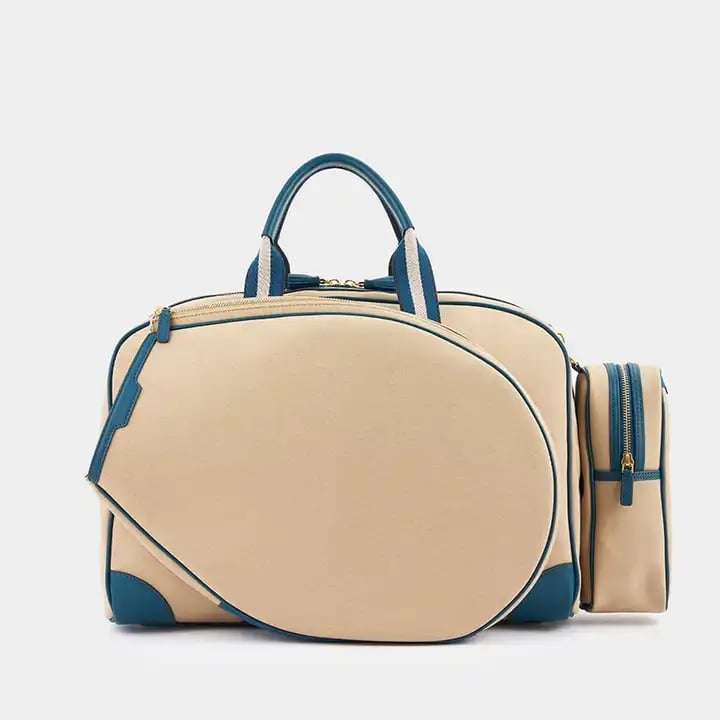
A pickleball bag starts and ends with paddle protection, because a paddle is the most expensive and most easily damaged item a player carries. What matters is not the number of paddles a bag claims to hold but how they are held. A dedicated padded sleeve or a compartment with its own soft face keeps paddles from grinding against each other, and a smooth, non-abrasive lining prevents the face texture from being polished smooth over a season of play. Depth matters too: a sleeve that is too shallow leaves the paddle edge exposed to whatever else is in the bag, and a sleeve that is too loose lets the paddle shift until the edge takes the impact. For a two or four paddle bag, the design question is whether the paddles are separated from hard items such as water bottles and shoes, because that separation is what actually prevents damage. Look for padded dividers, or at minimum a padded panel between the paddle zone and the main compartment.
Ball Storage, Ventilation and Odour Control
Balls are bulky, they roll, and they are often damp from outdoor courts, which makes ball storage a ventilation problem as much as a capacity problem. A large open compartment without airflow will hold moisture against the bag lining, and the resulting smell is the most common complaint about pickleball bags after a few months of use. Two design choices solve most of it. The first is a mesh panel or a ventilated section, so air can move through the ball zone rather than being trapped. The second is placing the ball compartment so it can be emptied and dried easily, rather than at the bottom of a deep pocket. Capacity is worth sizing against real use rather than the maximum number a manufacturer can fit: most players carry between three and twelve balls, and a compartment that holds them without spilling into other pockets is more useful than one that technically holds twice that number.
Shoe, Bottle and Valuables Compartments
Beyond paddles and balls, three smaller zones decide whether a bag works courtside. A ventilated shoe compartment keeps court grit and odour away from clothing and paddles, and a separated shoe zone is also what allows a bag to be used as a gym bag on non-pickleball days. A water bottle pocket needs to be deep enough that a full bottle does not tip out when the bag is set down, and it should sit outside the main compartment so a leak does not reach the paddles. A small valuables pocket for keys, phone, cards and a car fob should be closable and positioned where it can be reached without opening the whole bag, because courtside access is usually one-handed. These three features add modest cost, but they are the difference between a bag used every session and a bag left in the car.
Choosing a Carry System: Sling, Backpack, Tote or Duffel
The carry system determines how the bag is used, so it should be chosen before materials and colours are discussed. A sling bag suits players who carry one paddle, a few balls and a phone, and who want the bag to stay on the body while they play. A backpack distributes weight best for players who carry several paddles, a full change of clothes and shoes. A tote keeps access fastest for players who set the bag down courtside and reach into it repeatedly. A duffel offers the most volume for travel and for players carrying gear for more than one sport. The practical test is to decide how the bag will be transported most often, then pick the format that matches that, rather than trying to solve every scenario with one design.
What Changes at a Tournament
Tournament play changes the load more than the pickleball bag itself, and the differences are worth planning for. A one-day event can involve several matches, so the bag has to hold more than one set of balls and keep a spare paddle dry and undamaged between games. Access matters more than capacity: between matches there is rarely room to open a large bag fully, so the paddle sleeve, balls and bottle should be reachable from the top or from an open outer pocket. Weather is a genuine factor at outdoor venues, which makes a coated shell or a cover over the paddle zone worthwhile during a rain delay. Where the bag sits for hours also counts, so a bag that stands upright on its own base, with a closable valuables pocket, is easier to keep track of and keeps a phone, keys and a car fob out of sight. None of this changes the priorities above; it raises the standard on the paddle and ball zones.
A Practical Sourcing Scenario: A Club Programme
Teams and clubs buy pickleball bags by volume, and their requirements are more specific than a single-player purchase. Take an anonymous club programme that needed a consistent bag for members across several locations. The brief asked for a bag that could hold two paddles, a pair of shoes, a water bottle and a small valuables pocket, with a mesh ball section and a carry system that worked both as a backpack and as a grab handle. The specification fixed the zipper type, the webbing width and the colour reference so that all bags arriving across multiple production runs would match, and the decoration was applied by embroidery so the club mark would not fail before the bag did. A brief of this kind is usually sampled in three to five working days without a logo and seven to nine working days with branding applied, with a common minimum of 500 pieces per style and mass production in roughly thirty to thirty-five working days after approval. For a club ordering once a year, those windows need to be planned around the season rather than after it starts.
Features That Look Useful but Rarely Are
Pickleball bags accumulate features that photograph well and perform poorly, and a short list of them helps a buyer keep a specification honest. A paddle sleeve that is padded but has no separation from the main compartment does not protect paddles from bottles. A bag with six small pockets and no single large opening is slower to use courtside than a bag with three. An insulated pocket that cannot be removed is difficult to dry after a leak. A bag with a very rigid frame protects paddles but becomes uncomfortable to carry for a long walk to the courts. None of these features is wrong in principle, but each should be justified by the way the bag will actually be used, and any that cannot be justified should come out of the specification before it becomes a cost.
Frequently Asked Questions
What should tournament players look for that casual players do not?
Three things, in order. A padded paddle sleeve with a divider, so a spare paddle survives a long day. A ventilated ball section that can be emptied and dried between matches. And a closable valuables pocket that can be reached without opening the whole bag, because a tournament day means the bag is left unattended more often. A ventilated shoe compartment and a backpack or convertible carry system follow, since a tournament day is longer and often outdoors.
What size pickleball bag should I choose?
Start from how many paddles and how much else you carry. A sling sized for one or two paddles suits casual play, while a backpack or duffel with a shoe compartment suits regular tournament players who also carry clothing. Sizing against your usual load matters more than the maximum capacity quoted.
Do pickleball bags need a ventilated compartment?
They benefit from one. Balls and shoes are usually damp and warm after play, and without airflow that moisture stays against the lining. A mesh ball section and a ventilated shoe zone are the two features that reduce odour most effectively.
Can pickleball bags be customised with a club logo?
Yes. Embroidery, screen printing and woven or rubber labels are all used, and embroidery is often chosen for club marks because it does not crack or peel. Club programmes commonly order one fixed specification across sizes or colours, with a 500-piece minimum per style and branding samples taking seven to nine working days.




 Hot News