The Case Rests on How Often the Bag Is Used
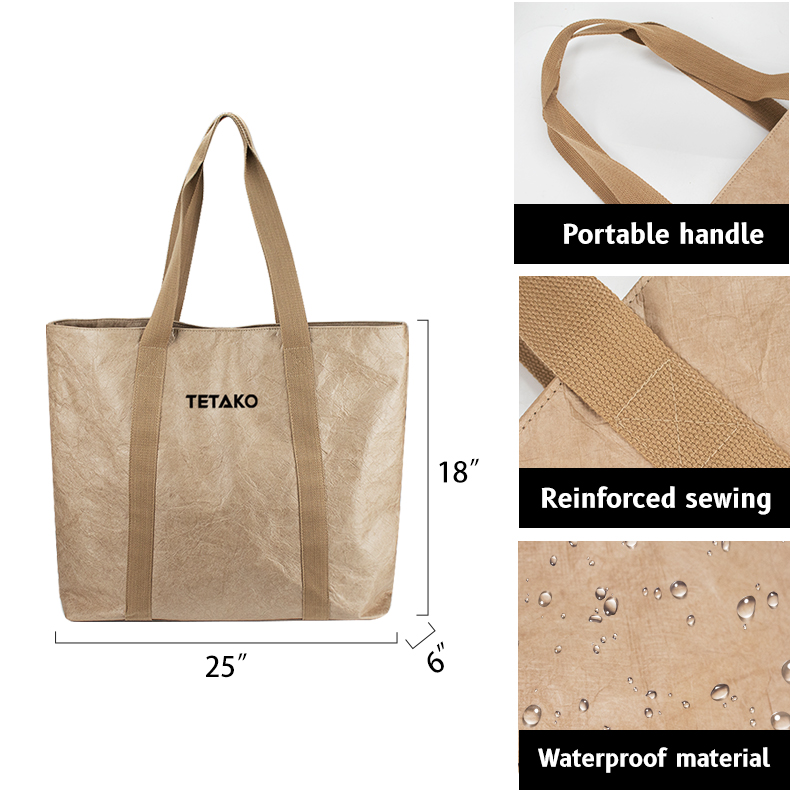
A canvas tote bag is often called sustainable without explanation, and that shorthand hides the variable that decides the answer. The environmental case for a reusable tote bag depends on three things: how many times it is carried, whether the fibre was responsibly sourced, and whether the bag can be repaired instead of replaced. The first is arithmetic. Because producing any bag carries an impact, the impact per use falls as the number of uses rises, which means a reusable bag only becomes the better choice after a long working life. That reframes the design question. A tote bag that is uncomfortable, awkward or fragile will be left in a cupboard, and a bag in a cupboard delivers no benefit at all, whatever it is made from. Durability and comfort are therefore not marketing features. They are the mechanism by which the sustainability claim is actually realised.
Why Cotton Canvas Ages Differently From Synthetic Fabric
Canvas is a woven cotton fabric with a substantial weight, and its behaviour over time is the reason it suits long-life use. Heavier cotton holds its shape and resists the stretching that thinner fabrics develop under load, so a canvas tote keeps its proportions instead of sagging out of shape. Cotton also takes repairs well: a stitched cotton handle can be restitched, re-hemmed or patched, and the repair blends into the fabric rather than creating an obvious plastic scar. There is a trade-off worth stating plainly. Cotton canvas is heavier than a comparable synthetic shell, it absorbs water unless treated, and it dries slowly. A coated or water-repellent canvas reduces the moisture problem, and a heavier weave resists abrasion longer, but neither removes the weight penalty. Weave density is the other variable that predicts how a canvas tote will wear, because a tighter weave resists abrasion at the base and corners, which is exactly where a tote bag meets the ground and the edge of a car boot. For a buyer, the honest positioning is that canvas trades light weight and quick drying for structure, repairability and a surface that ages rather than fails.
What to Check Before Calling a Tote Bag Sustainable
Because sustainability claims attract scrutiny, buyers are better served by verifiable specification than by adjectives. Four checks are worth running. The first is fibre documentation: ask which specific fabric was used and what documentation accompanies it, rather than accepting a general description of the material. The second is construction longevity, which means reinforced strap anchors, a doubled or stiffened base, and a lining that protects the shell from the inside. The third is repairability: can the handle be replaced, and is the stitching accessible enough for a repair to be attempted at all. The fourth is the decoration method, since a print that cracks after a season shortens the bag's useful life no matter how good the fabric is. Where material compliance documentation is required by the destination market, it should be requested and reviewed before the order is confirmed rather than after delivery.
A Practical Sourcing Scenario: One Specification Across Several Uses
Sustainability claims are easiest to defend when one good specification is used across a whole range, because it reduces the total number of material orders and colour references. Consider an anonymous retail scenario in which a brand needed a canvas tote bag in three roles: a compact version for retail packaging, a daily carry version with a slip pocket, and a larger market version. All three used the same canvas weight, the same handle webbing and the same stitching standard. Only the dimensions and the pocket count changed. The benefit was not only commercial. Because the fabric and handle specification were identical, durability testing done on one size stayed informative for the others, and reorders could be matched against a single approved colour reference. In practice, a specification like this can be sampled in three to five working days without a logo and seven to nine working days with branding, with a common minimum of 500 pieces per style and mass production in roughly thirty to thirty-five working days after approval.
Care and Repair: The Part Buyers Usually Forget
The habit that most reliably extends a canvas tote bag's life is unglamorous: spot cleaning instead of washing, and drying flat rather than hanging a wet bag from its handles. Handles carry the load, and hanging a wet canvas tote from them puts the wet weight of the entire bag onto stitched seams that were never designed to hold it in that direction. Simple as it sounds, reversing that habit is the single most effective change a brand can communicate, because handle seam damage caused by wet hanging is one of the most common reasons a canvas tote bag is retired early. For brands, care information is also a customer retention tool. A short care card, or a care line printed inside the bag, reduces the chance that a perfectly repairable bag is discarded early, and it gives the customer a reason to keep using the item that keeps the brand in circulation.
Frequently Asked Questions
Are canvas tote bags really better for the environment?
They can be, but only under conditions. Canvas has an advantage when the bag is used many times, made from a documented fibre, and capable of being repaired. A heavy canvas tote that is bought and then left unused has no advantage over any other bag.
Are canvas tote bags washable?
Spot cleaning with mild soap and lukewarm water is the safest routine, followed by drying flat in the shade. Machine washing can distort the shape and stress the handle seams, and a wet bag should never be hung from its handles to dry.
Do canvas tote bags work for promotional use?
They do, and they are frequently ordered as a family of sizes from one fabric and handle specification. Screen printing and embroidery are the usual decoration methods, and a heavier canvas holds a printed surface better than a light one, so the print is less likely to crack.



 Hot News