The Real Benefit Is Fewer Decisions
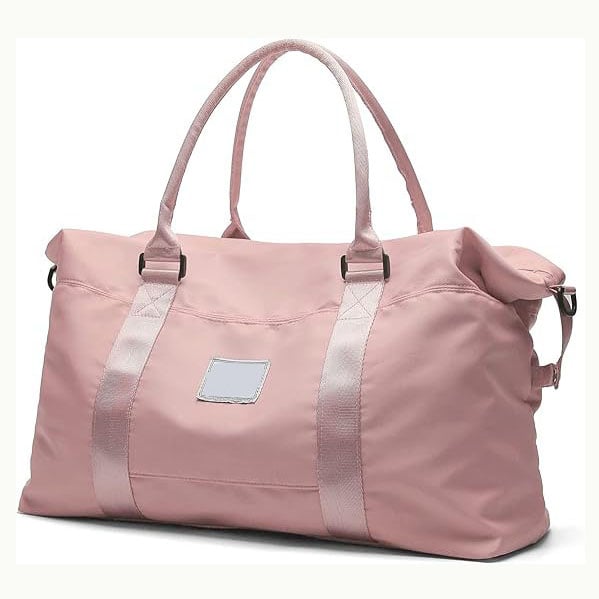
The main benefit of a large tote bag is not capacity in the abstract. It is the number of small decisions it removes from a day. A bag that can take a laptop, a folder, a water bottle, a gym kit and a change of shoes means the user stops planning around which bag to carry and stops leaving things at home because they will not fit. That flexibility is what keeps large tote bags in circulation across commuting, study, air travel and shopping, even in seasons when smaller bags dominate fashion coverage. There is a second, quieter benefit. A large tote is usually open and shallow, so anything inside is visible without unpacking. For people who move between contexts during a day, that ease of access is often worth more than the tight organisation of a fully compartmented bag.
Where a Large Tote Starts to Fail
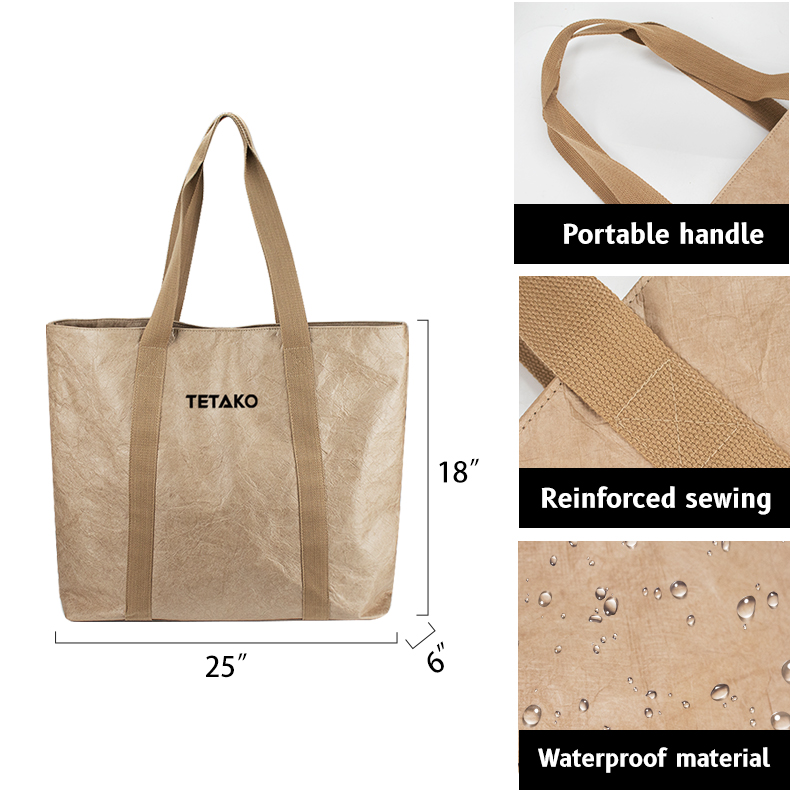
Because the format looks simple, buyers assume it is easy to make. The failures are predictable. The most common complaint is strap failure at the point where the handle meets the body, which happens when the anchor is stitched as an afterthought rather than designed for the load. The second is base sag, which appears when the bottom panel is a single layer of soft fabric carrying a laptop and a full water bottle. The third is shoulder discomfort: a narrow webbing handle holding several kilograms concentrates pressure on a small area. The fourth is the absence of any closure, which is acceptable in a shopping bag and unsuitable for a commuter carrying electronics. A well-specified large tote addresses these four points before decoration is even discussed.
Construction Details That Decide How Long a Tote Lasts
Strap attachment should be reinforced with bartack stitching, box-and-cross reinforcement, or preferably both, and the handle should be tested at a multiple of its expected working load. The base benefits from a reinforced panel, a doubled layer of fabric, or a stiffener that keeps the bag sitting upright when it is only partly packed. Handle length should be checked against real use: a shoulder strap must clear a winter coat, while a hand-carry strap should not drag on the ground. Materials set the ceiling on durability. A heavier woven fabric or a coated canvas will outlast a light one, but weight has to be balanced against how much the bag already carries. Weight distribution deserves the same attention as weight itself, because a tote bag carrying ten kilograms in one lump at the front behaves very differently from the same load held close against the wearer's back. A lining protects both the contents and the outer shell, and an internal slip pocket keeps heavy items such as a laptop or a bottle close to the body, where they are easier to carry and less likely to tip the bag. If a closure is required, a magnetic snap, a top zip or a fold-over flap each solve different problems and should be chosen against the buyer's actual use case.
A Sourcing Scenario: Two or Three Sizes From One Specification
In practice, most large tote programmes are built around two or three sizes rather than one. A retailer might order a small version for retail packaging, a mid-size for daily carry and a large version for travel, all sharing a single fabric, a single handle specification and a single colour reference so they can be merchandised as a family. Where branding is needed, screen printing, embroidery, a woven label or a rubber patch are all workable, and the choice is usually driven by artwork complexity rather than by cost. As a planning reference, a bag manufacturer that handles both design and production in house typically converts a submitted sketch into technical flats within about a day, samples in three to five working days without a logo and seven to nine working days with branding, and runs mass production in roughly thirty to thirty-five working days after approval, with a common minimum of 500 pieces per style. Those windows matter less as a promise than as a scheduling input: they determine whether a range can realistically reach the shelf in time for a given season. Keeping a size family narrow also reduces the number of colour references a factory has to match, which is one of the most common sources of reorder disputes in large tote bag programmes.
How to Specify a Large Tote Without Over-Building It
The temptation with a large tote is to add everything: a laptop sleeve, a bottle pocket, a key leash, a zip closure, protective feet and a trolley sleeve. Each addition has a cost in weight, complexity and price, and past a certain point the extra features stop solving problems. A useful discipline is to define the bag's primary job in one sentence, then allow only the features that serve it. If the bag is for commuting, a laptop sleeve and a closure earn their place. If it is for retail or promotional use, a clean interior and a strong handle are worth more than internal organisation, because the bag will rarely be packed to capacity. Writing that sentence down before the specification is agreed is the cheapest quality control available when one tote bag platform has to serve more than one purpose.
Frequently Asked Questions
What size is considered a large tote bag?
There is no fixed standard, but a large tote is generally one that takes a laptop and a folder side by side. Because sizing is customisable, the practical approach is to specify internal dimensions around the largest items the bag must hold rather than around an external measurement.
Can a large tote bag hold a laptop safely?
It can, if the specification supports it. A padded sleeve, a reinforced base and a closure all contribute, and heavy items should sit close to the back of the bag so the load stays balanced against the wearer.
Are large tote bags suitable for promotional and corporate use?
They are, and they are frequently ordered in multiple sizes from one material specification. Screen printing and embroidery are the usual branding methods, and a fabric with enough body to hold its shape without packing material tends to merchandise and photograph better.



 Hot News