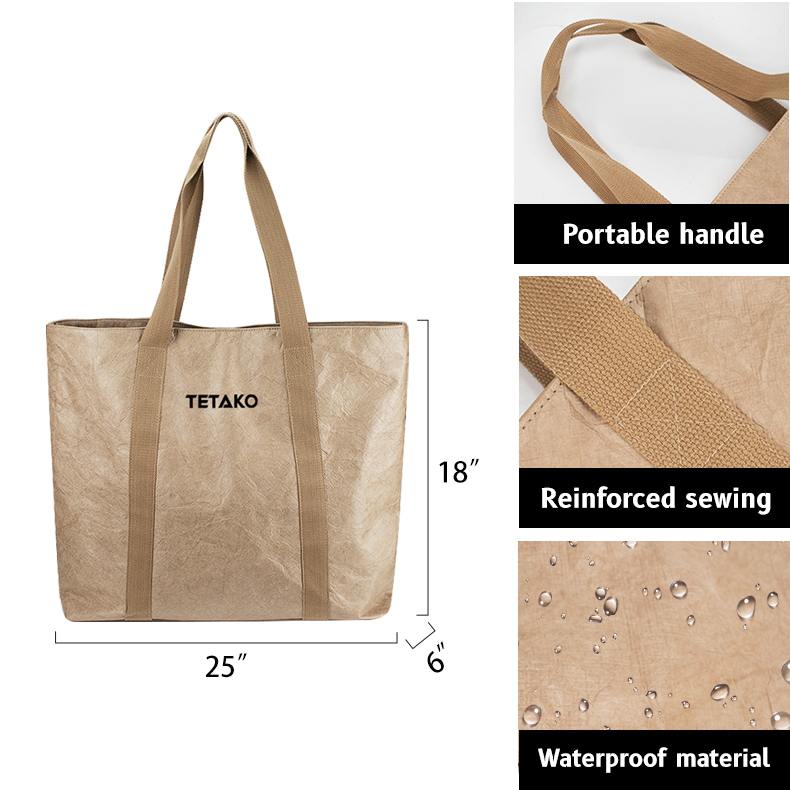
A tool bag is not a fashion accessory. It is a piece of work equipment that gets thrown into truck beds, dragged across job sites, exposed to rain, dust, and grime, and loaded with sharp, heavy tools day after day. When a tool bag fails—a seam splits, a strap tears, a zipper jams—it does not just inconvenience the worker. It can mean lost productivity, damaged tools, and in some cases, a safety hazard if heavy tools fall from a failed bag at height. Understanding what makes a tool bag genuinely durable requires looking beyond marketing claims and examining four specific factors: material grade and weight, seam construction method, hardware quality, and weight distribution design.
Material Grade and Fabric Weight
The foundation of a durable tool bag is the fabric it is made from. The most common specification is denier, a measure of fiber thickness. A 600D (600 denier) polyester is a standard mid-weight fabric suitable for light to medium tool loads. For heavy-duty applications—construction, electrical work, plumbing—1680D ballistic nylon or polyester is the industry benchmark. The term 'ballistic' refers to the fabric's original military application and indicates a dense, abrasion-resistant weave. The difference between a 600D and 1680D bag is not subtle: the heavier fabric resists punctures from sharp tool edges, withstands abrasion from being dragged across concrete, and maintains structural integrity far longer under load. Beyond denier, fabric coatings matter. A PVC or TPU backing applied to the underside of the fabric adds water resistance, prevents fraying at cut edges, and increases tear strength. Tool bags with uncoated fabric interiors degrade noticeably faster in wet job site conditions.
Seam Construction: The Most Common Failure Point
When a tool bag fails, it almost always fails at the seams. The fabric itself rarely tears; instead, the stitching gives way under sustained load. The difference between a bag that lasts one season and one that lasts five often comes down to seam construction. Double-stitched or triple-stitched seams use parallel rows of stitching to distribute load across multiple thread lines. Bar-tack reinforcement—a dense zigzag stitch pattern applied at stress points such as handle attachments, strap anchors, and pocket corners—prevents the progressive stitch failure that begins at a single stressed point and unzips along the seam. The thread itself also matters: bonded nylon thread, which is nylon thread coated with a bonding agent to resist unraveling and abrasion, is standard in professional-grade tool bags. Cotton-wrapped polyester thread offers a slightly higher heat tolerance but is less common. For the bottom panel—the highest-wear area—some manufacturers use a double-layer construction where a second layer of heavy-duty fabric is stitched over the primary bottom panel, creating a replaceable wear surface.
Hardware: Zippers, Buckles, and Rivets Under Load
The hardware on a tool bag takes tremendous abuse. Zippers are repeatedly opened and closed under tension when compartments are overstuffed. Plastic zippers, common on consumer-grade bags, will fail under this load—teeth strip, sliders jam, and coil separates. YKK zippers, specifically their heavy-duty product line, use larger coil sizes and reinforced sliders designed for industrial applications. The zipper size is designated by a number: a #8 or #10 YKK zipper provides significantly more strength than a #5, which is standard on fashion bags. Buckles and clips see similar stress. Side-release buckles on tool bag shoulder straps should be made from acetal (POM) rather than standard nylon, as acetal offers better fatigue resistance and maintains flexibility at low temperatures without becoming brittle. Metal hardware—D-rings, rivets, snap hooks—should be made from zinc alloy or stainless steel with a corrosion-resistant finish. Cheaply plated metal hardware will rust within months of outdoor use, and rusted rivets eventually fail, causing handle and strap detachment.
Weight Distribution and Load-Rated Design
A tool bag can be made from the best materials and still fail prematurely if the weight distribution design is flawed. The most common design error is placing the handle attachment points too close together, which concentrates the bag's entire load on a small section of seam when carried. A properly designed tool bag spaces handle anchors wider apart to distribute weight more evenly across the bag's structure. The bottom panel should be reinforced not just with double-layer fabric but with a rigid baseboard insert—typically made from PE (polyethylene) board or corrugated plastic—that prevents the bag from sagging under heavy loads and protects the bottom seam from abrasion when the bag is set down on rough surfaces. For shoulder-carry tool bags, the strap should attach at reinforced D-ring anchor points rather than being sewn directly into the bag body, as direct-sewn straps concentrate stress at a single seam line. A bag rated for a specific weight capacity—for example, 25 kilograms—has been designed and tested to carry that load without structural failure, unlike unrated bags where the weight limit is unspecified and untested.
Application Example: Electrical Contractor Tool Bag Fleet Purchase
An electrical contracting company in Australia standardized its field technician tool bags across 80 workers. The previous bags—generic nylon tool bags with single-stitched seams and plastic zippers—were failing at an average rate of one bag replacement per worker per year, with the primary failure modes being seam separation at handle attachments and zipper track breakage. The company switched to heavy-duty tool bags constructed from 1680D ballistic nylon, triple-stitched at all load-bearing seams with bar-tack reinforcement at handle anchors, equipped with #10 YKK heavy-duty zippers and acetal side-release buckles on shoulder straps. The bags were sourced from a manufacturer offering OEKO-TEX certified linings and ISO 9001-certified production quality control. After one year of use across the 80-worker fleet, zero bags required replacement due to structural failure. The per-unit cost was approximately 40 percent higher than the previous bags, but the elimination of annual replacements—and the productivity loss from bag failures on job sites—resulted in a net cost reduction within the first 18 months.




 Hot News